Category Archives: Sci-Fi

Gaslands 3: Marstorius!

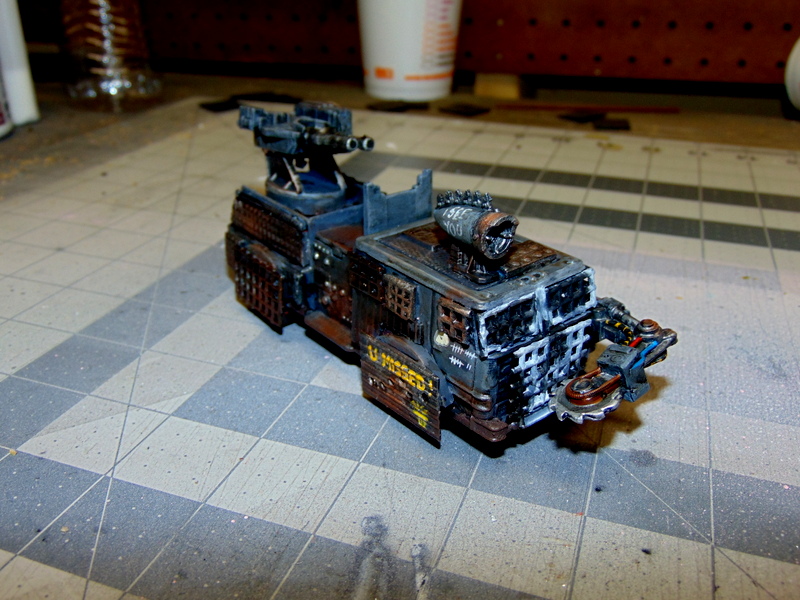
Well, I said I would post something that wasn’t Gaslands, but I lied. I’m too hooked. My Gaslands kitbashing continues on, with my first “big boy”. Ladies and gentlemen of the wasteland, I present: MARSTORIUS!!!!

I got the name from an old fighting game. Marstorius was a big wrestler from Fighter’s History. Here he is giving a bull a suplex, because as everyone knows, bulls are assholes. Marstorius was a poor imitation of Zangief; but that’s hardly surprising as Fighter’s History was a poor imitation of Street Fighter II. I like the name, and it fits my latest project nicely.

I need a bully: someone whose sole purpose is to ruin the day of anyone he meets. Someone who can dish out a curb-stomp like no one else, but can also take whatever punishment comes his way with a bloody, gap-toothed smile. In other words, I need an armored bus.

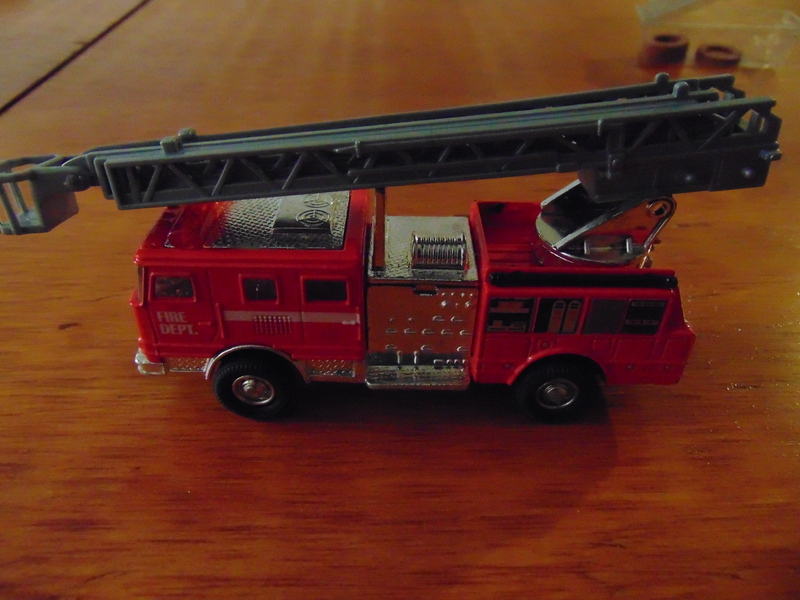
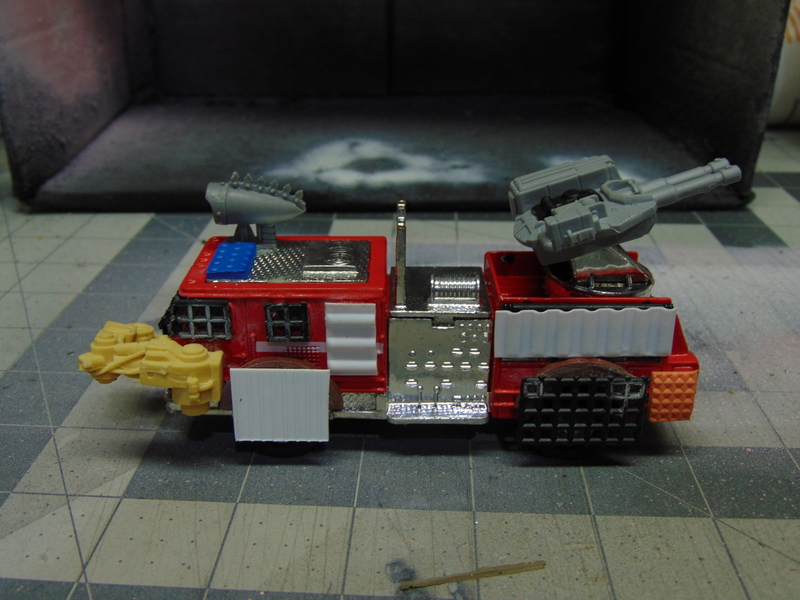
I started with this fire truck. It’s not a Hot Wheels or Matchbox; it’s sold at CVS and made by a Chinese company that makes cars that are (mostly) compatible with 28mm miniatures. In fact, I own a lot of those cars and you can see them on After Action Reports all over this blog, if so inclined. This fire truck is the same size as most of their cars, which of course means it’s totally out of scale (i.e. too small) with the rest of their line, but it is perfect for “Hot Wheels” scale, as it’s much bigger than a standard Hot Wheels car (about the size a fire truck would be next to a HW car). Hopefully that makes some kind of sense.

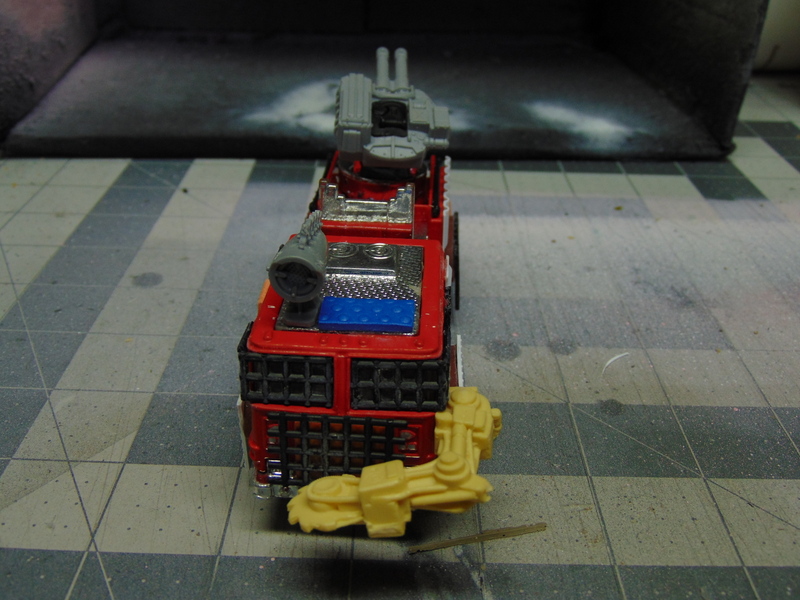
Anyway, the first thing I did was remove the side ladder, the siren lights and the extending ladder. The extending ladder could come in handy for use as scenery in other games. Removing it left me with an empty bracket on a 360° rotating platform, which is perfect for a turret emplacement.


Many of the scenarios in Gaslands are races, or variations thereof. Being an armored bus, Marstorius won’t win any races, but that’s not his job. His job is to make sure YOU don’t win any races.

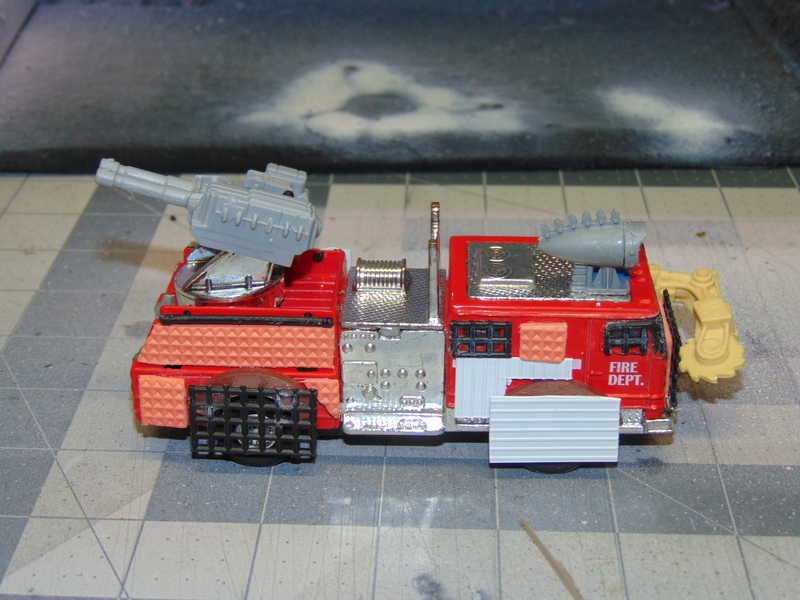
With that in mind, I attached a turret from a Matchbox tank to the extending ladder mount, giving it a heavy machine gun with a 360° field of fire. This will allow targeting pretty much anywhere in range. Then I added the armor. Lots of styrene sheeting, craft foam and plastic mesh slapped all over this baby. It’s armored EVERYWHERE. I had some leftover rubber gaskets I had bought to replace on my outdoor faucets, so I cut them and fitted them around the wheel-wells of the truck so the armor panels wouldn’t be attached to the truck directly, and wouldn’t affect wheel rotation.

I knew I wanted a ram on the front, so I went with this buzzsaw arm. It’s an extra bit I had from an Armorcast Frank-N-Steam model I bought years ago. They don’t seem to make that model anymore, but it’s a variation of the other “Frank” models, only with two legs. I can just see Marstorius turning any vehicle foolish enough to get in his way into an instant convertible! I stuck a searchlight on the top and some auto-launchers on the back, both from old Leman Russ tank sprues. (Gotta love the bitz box!) The auto-launchers represent caltrop droppers, lest any pursuers get too close. It is unwise to tailgate Marstorius.

In Gaslands, a bus has 3 Build slots. The heavy machine gun, caltrop droppers and the front buzzsaw (ram) take up a slot each, which means the armor I festooned Martsorius with is pretty much just for show. If I wanted to make him tougher, I could forego the caltrop droppers for some extra armor instead, making him more like a war rig than a bus. He’s certainly big enough!

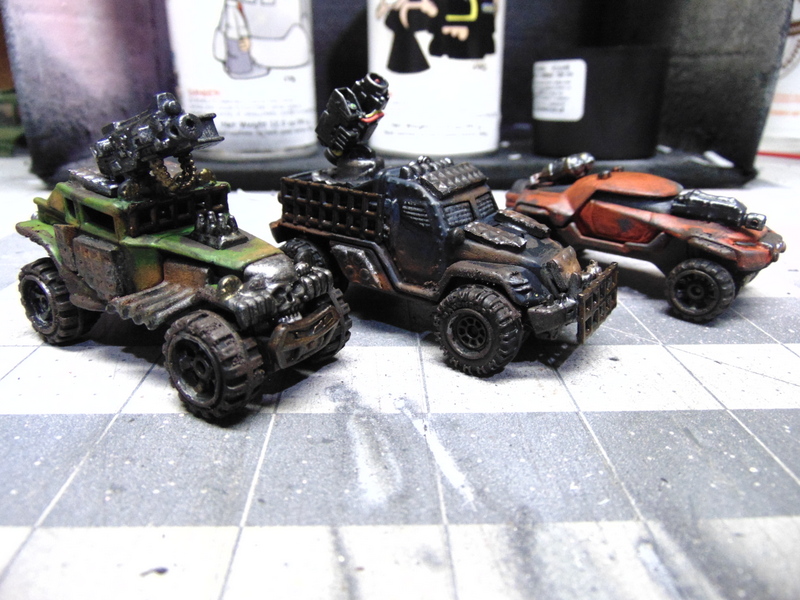
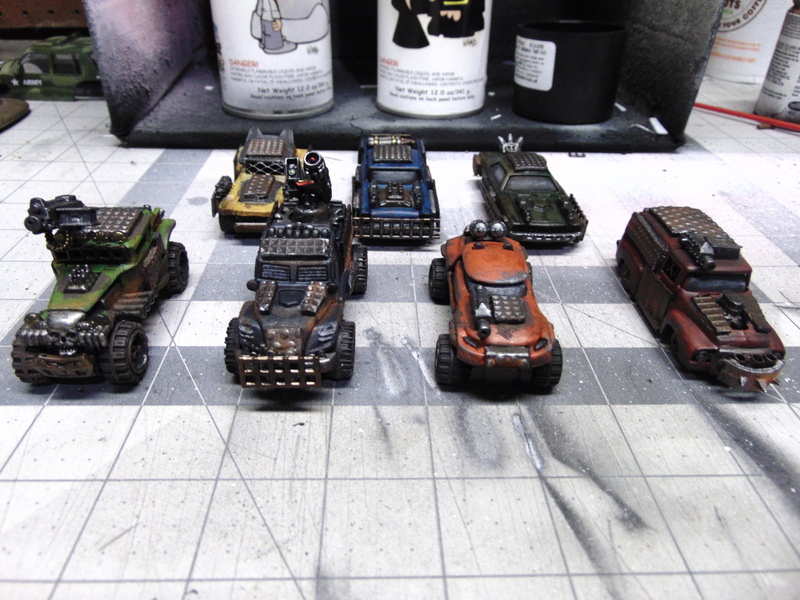
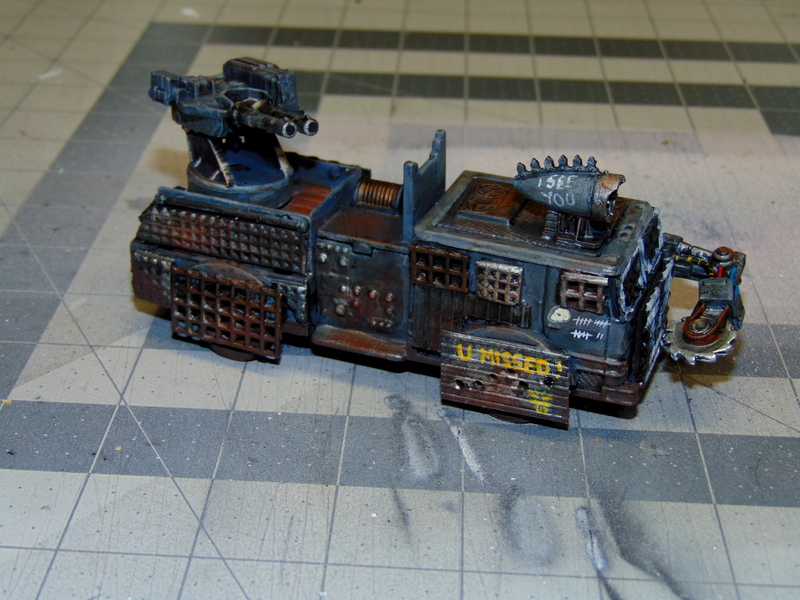
Here’s how he looks painted up. I used a mix of Army Painter, Cote D’Arms, Games Workshop, Reaper and Vallejo paints. Marstorius’s body and the turret is based with Necromancer Cloak (AP), with a highlight of Ash Gray (R) and Concrete Gray (R), then given a wash of Agrax Earthshade (GW). The armor plating was painted with either Gunmetal Grey (V), Gun Metal (CD) or Tin Bitz (GW) before being washed with Armor Wash (CD). The buzzsaw wires were painted various colors and given a wash of Nuln Oil (GW). I used some Stirland Mud and Typhus Corrosion (both GW) to further the grimy look. Lastly, I used some MIG rust pigment on the armor and body.

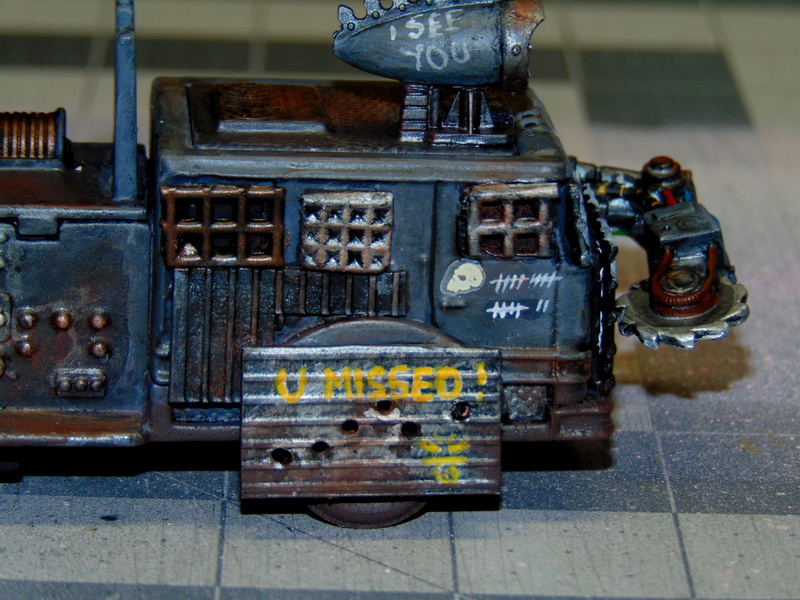
It’s not as obvious as I would like, but I painted this skull visage on the front of Marstorius’s cab. It’s tough to see behind the buzzsaw arm, but it’s there. I painted it with some watered-down white paint to simulate a spray paint effect.

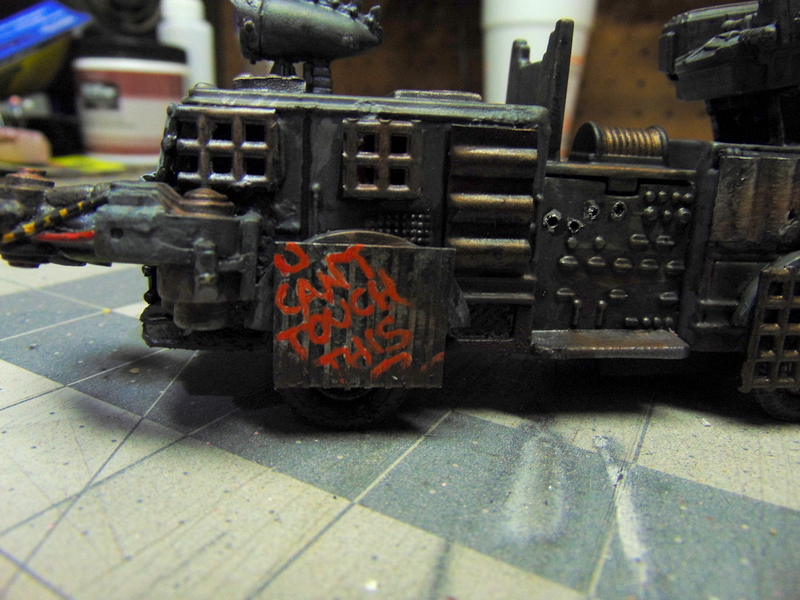
I decided to add some other small touches, like this hash-mark tally of the vehicles Marstorius has sent to the junk heap. I free-handed the grafitti on the armor panels and searchlight and added the bullet holes with a Dremel.

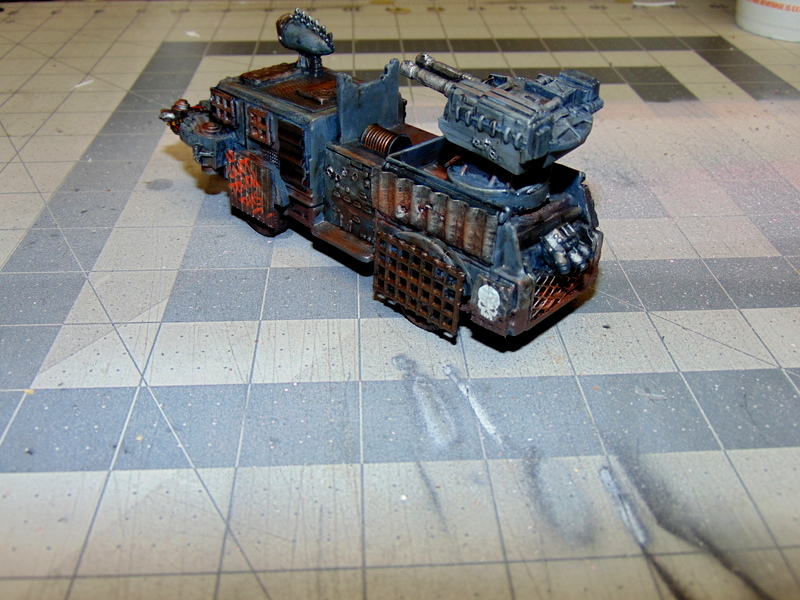
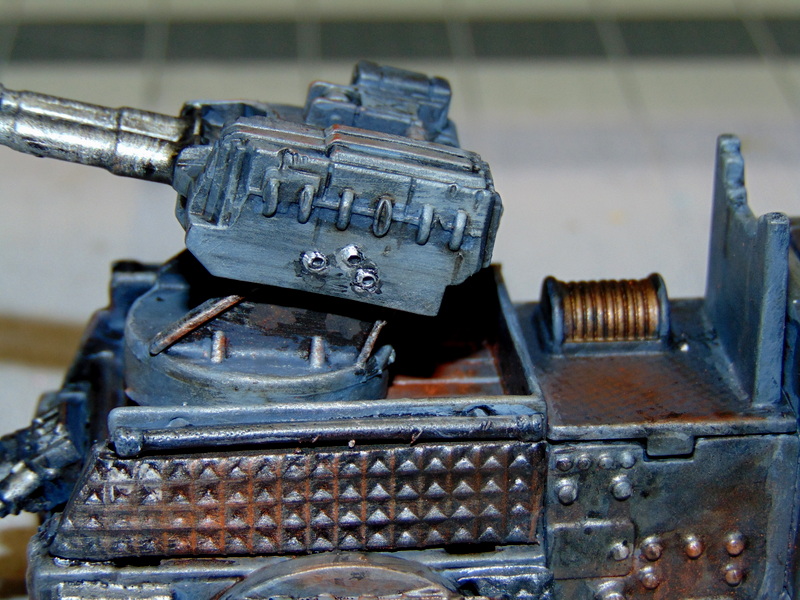
Here are some shots showing some more battle damage. Marstorius tends to attract gunfire.

Another shot showing the rotation of the turret. That’s an old GW tank decal on his rear side panel.

Overall, I’m happy with my armored bus. I have some other cars in the works, so watch this space for more Gaslands conversions, coming soon!

Gaslands 2: Nitro Burn and Oil Can Harry!

I was warned this would happen. I have officially been bitten by the Gaslands bug. I guess that’s why I decided to convert some buggies next.

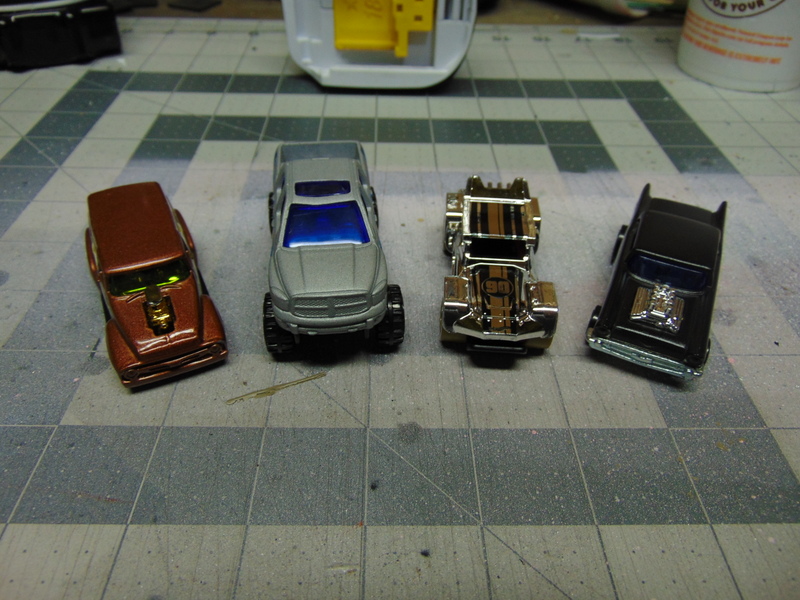
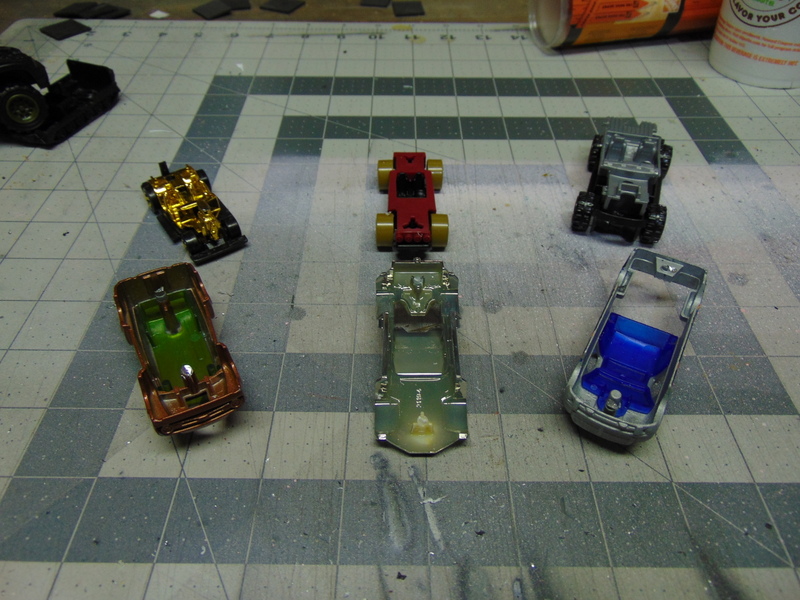
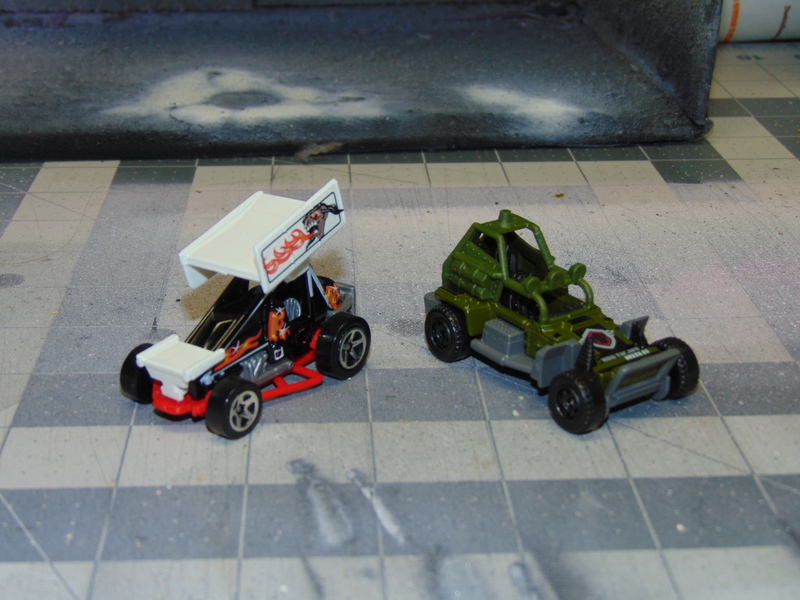
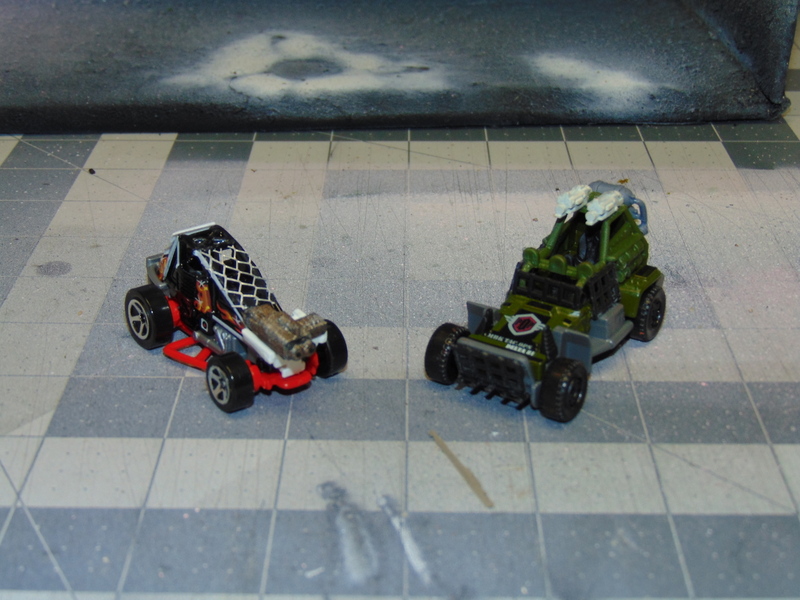
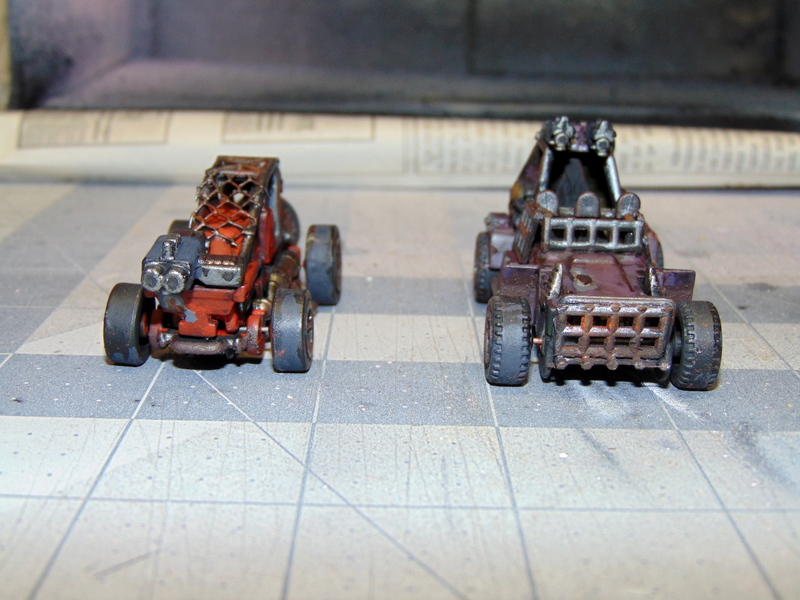
These are what I started with. I bought both of these cars brand new (a dollar apiece at soon-to-be-gone Toys R Us). The one on the left is a Hot Wheels car, the one on the right is Matchbox. Both are open-topped buggies. I really like the look of the one on the right. It has two front seats and a raised back seat, perfect for a gunner!

Buggies are light vehicles in Gaslands, meaning they’re pretty much just there to cause as much trouble as possible before they blow up.  I put minimal armor on the frames, since armoring up a buggy is a waste of a build slot, IMO. Still, I wanted the overall “Road Warrior” aesthetic…

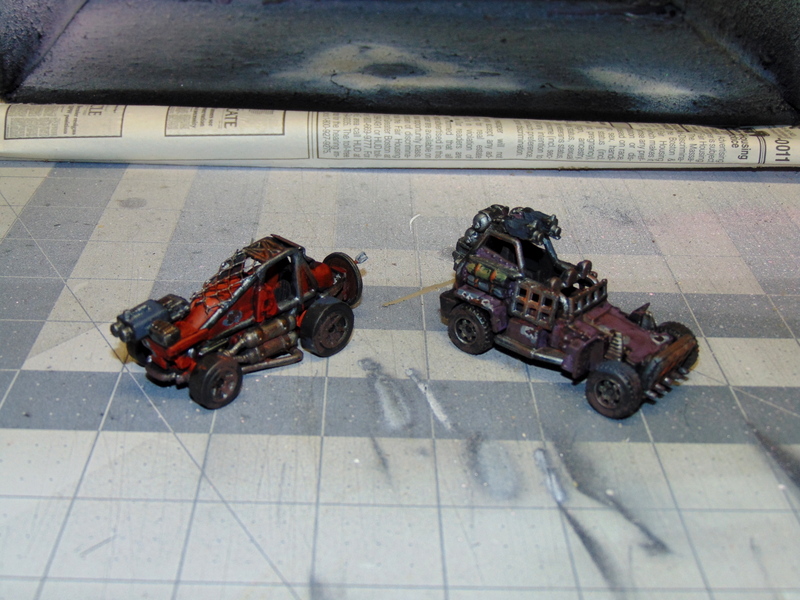
Nitro Burn, on the left, had that ridiculous I-don’t-know-what on his roof, so I got rid of that immediately. For “armor”, I glued some some wire mesh to his canopy and some styrene to his back window. I gave him a GW storm bolter as a front-mounted machine gun and stuck a flamer tank to the side as a nitro booster.

Oil Can Harry, on the right, got two space marine bolters mounted on his roll cage as machine guns. I made an oil slick dropper from an old heavy flamer nozzle (pointed downward) and some flamer tanks. For “armor”, I covered his front and side windows with plastic mesh, and gave him a spiky front bumper.

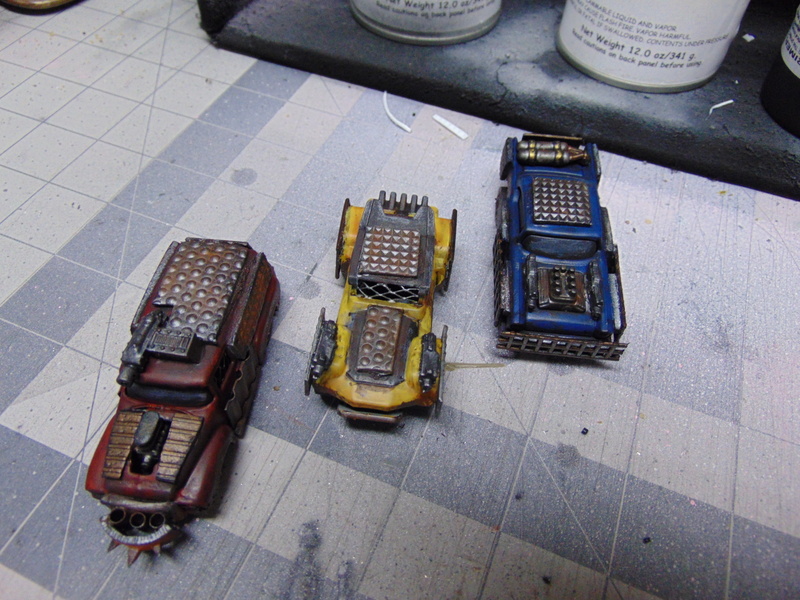
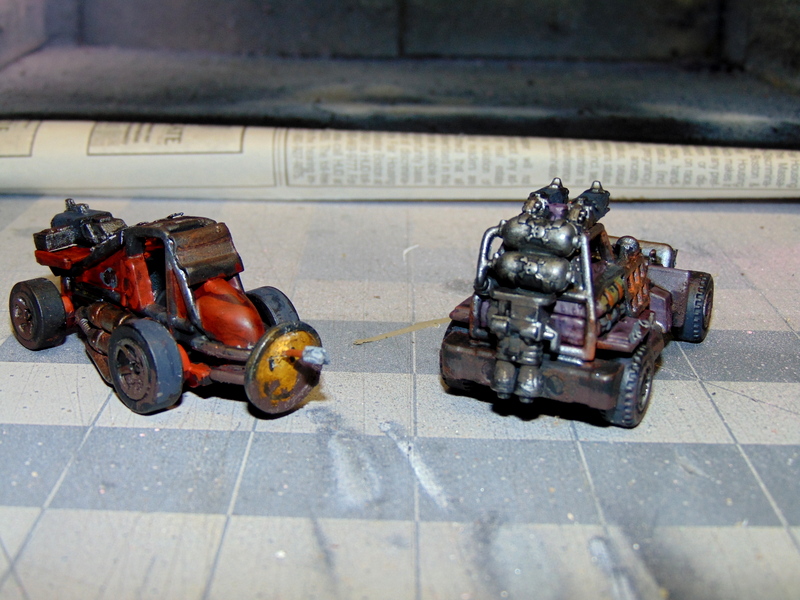
Here’s what they look like after some painting and weathering. After priming both black, I used a mixture of Reaper, Cote D’Arms, Vallejo, Army Painter and GW paints. Nitro Burn got a basecoat of Black Red (V), highlighted with Rusty Red (R), while Oil Can Harry was based with Dusky Grape (R) and highlighted with Faded Purple (R). The metal on both buggies was Gunmetal Grey (V) and the wheel rims and guns were Gun Metal (CD). The gun casings were painted Necromancer Cloak (AP). The colors on both got a wash of Nuln Oil (GW), while the metallics were washed in Armor Wash (CD). I also used some Dawnstone, Administratum Grey and Tin Bitz (all GW) to pick out some dinged up and rusted spots. I used some Stirland Mud and Typhus Corrosion (both GW) where it made the most sense. Lastly, I applied some MIG Rust pigment to all the “armor” and to the rims.

As a final touch, I decided to have a little fun with Nitro Burn. I attached an old GW Fantasy round shield to his rear, painted up like a smiley face. I figure Nitro Burn likes to live dangerously. He likes to taunt his opponents by speeding ahead of them, forcing them to look at that infuriating yellow smile. Naturally, that face is a prime target for weapon fire, so I drilled a small hole and stuck an arrow in it, no doubt fired by some enraged wasteland scavver!

My next Gaslands project is a doozy, but I think I’m going to try to paint something non-Gaslands related first.

But I make no promises.


First Gaslands Build: Coughin’ Joe!

I discovered Gaslands by reading Miniature Wargames magazine a couple of months back. It’s a game of post-apocalyptic vehicular combat put out by Osprey.  It’s designed to be played with standard Matchbox/Hot Wheels cars that you convert into Mad Max-esque death machines, and it looks like a lot of fun.

While my experience with Osprey Games has been hit-or-miss so far, I figured why not give it a shot? After all, the entry cost to a game like this is minimal; you only need the rules and a bunch of toy cars to play. The rules are reasonably priced at under $20, and toy cars are easy enough to come by. They’re pretty cheap even brand new, and better still; there are tons of thrift shops, flea markets and secondhand stores where you can pick up used and banged up toy cars for even less! (If you have kids, you can probably find a bunch laying around your house on inconvenient places, like stairs.) You’re going to convert them anyway, and cosmetic damage is the look you’re going for!

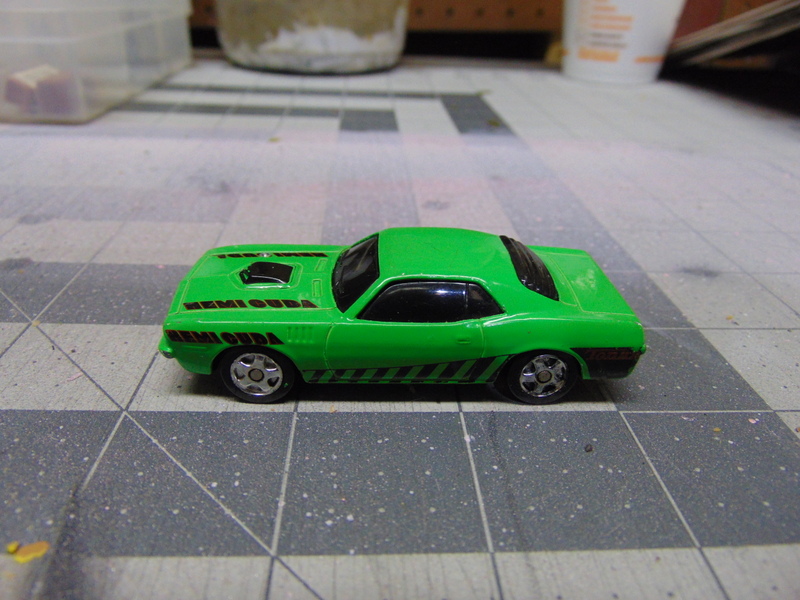
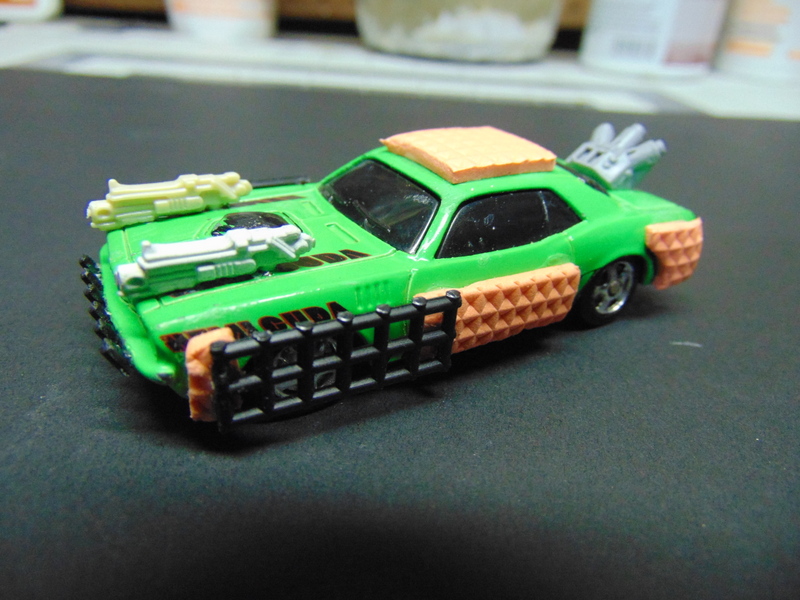
I went by a thrift shop and bought a bag of 6 cars for $3.00. It contained this car, a “Plymouth Hemi Cuda” by Maisto.  I actually know a guy who owns a 1969 Plymouth Barracuda. He drove it all through high school and still has it to this day, some 30 years later. It gets about 3 miles to the gallon, but it’s absolutely the coolest car I’ve ever been in, and it hauls balls, to put it mildly.

I decided this is going to be my first Gaslands conversion.

Images abound on the Interweb of Gaslands vehicles; simply Google “Gaslands” and you’ll see for yourself. There are also many Youtube videos to view on the subject. One particular creator, JH Miniatures, does a terrific series entitled Wastelands Workshop. It’s a bit technical, but you don’t need to get as fancy as he does. I highly recommend his videos.

If you’re like me, i.e. an obsessive hoarder of bits from previous kits, then rejoice, for Gaslands is the game for you. I played a lot of Warhammer 40K back in the day, using Space Marines (of course) and Imperial Guard. In other words, I have a lot of old vehicle bits that have been sitting in boxes for a very long time. But you don’t need to have a ton of fancy bits like me, or be as technically savvy as JH Miniatures to get to work on Gaslands conversions. DM Jim over at Game Terrain Engineering does a bunch of Gaslands videos, and this one in particular shows how to use common junk items as weapons and armor. Good stuff!

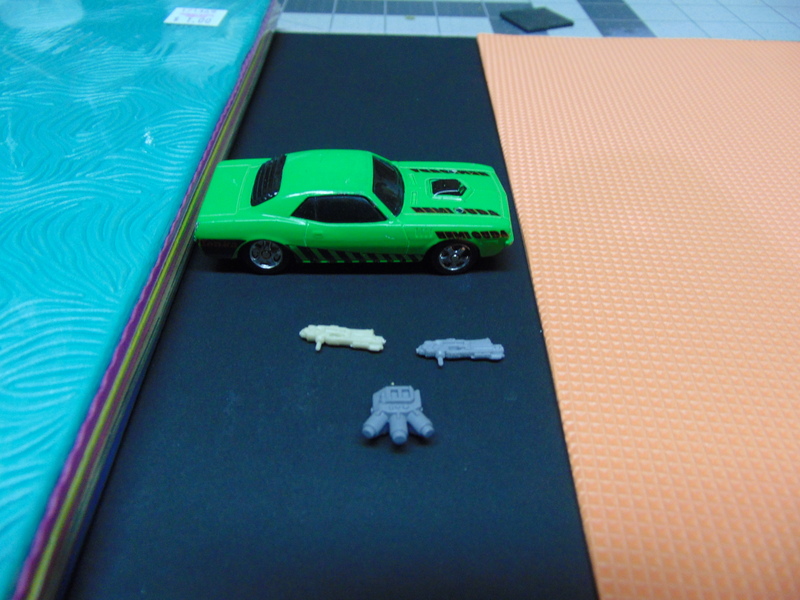
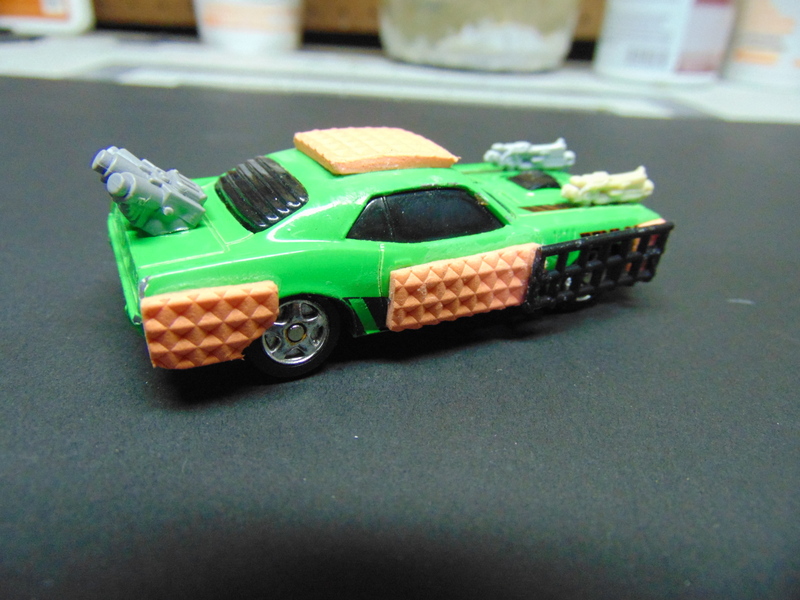
But back to me…I decided not to go too crazy with my first car. I’ve opted to use some bolters from some old Rhino kits and smoke launchers from a Leman Russ tank as conversion bits. The bolters are machine guns, and the smoke launchers could represent turbo boosters, caltrop or glue droppers, oil dispensers, or…well, smoke launchers, which is what I’m going to use them for. Coughin’ Joe, get it?

For armor, I used some old material I had laying around: these textured craft foam sheets. Each package cost me a dollar, and you get six different texture patterns. Four of these have patterns that are useless (like the one pictured), but there are two that could work.

The orange stuff is the craft foam. It’s easy as pie to cut and glue, and the grid pattern makes it look industrial enough to serve as armor. I also clipped some plastic mesh from a needlepoint sheet (I think that cost a dollar, too), and glued it around the front wheel wells to offer the tires some protection.

The smoke launchers glued easily to the back of the car. The bolters have little mounting pegs on them, so I decided to drill tiny holes to accommodate the pegs. This was surprisingly difficult, even with my Dremel on max rpm. Turns out I needed a cobalt drill bit to get through the car. One quick trip to Home Depot sorted that out, and voila! Front mounted machine guns!

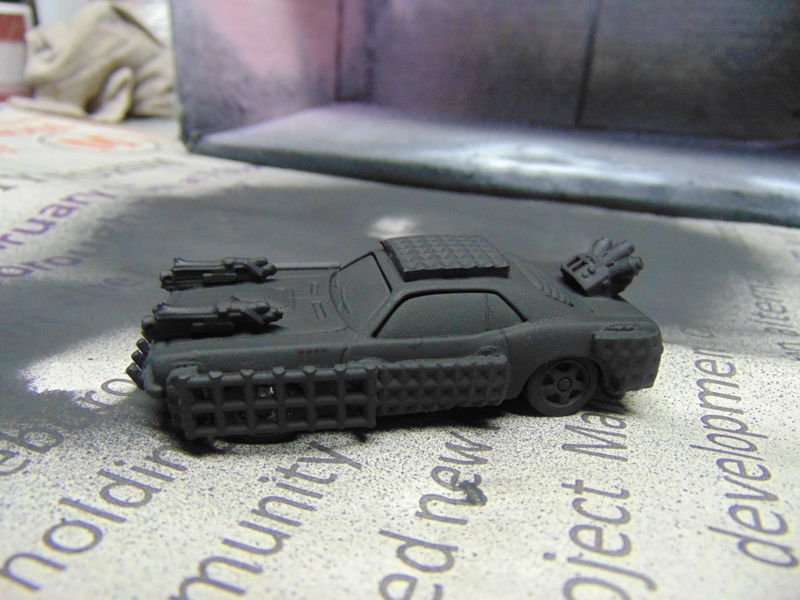
Once assembled (it took less than 20 minutes, not counting my trip to Home Depot), I primed it black.

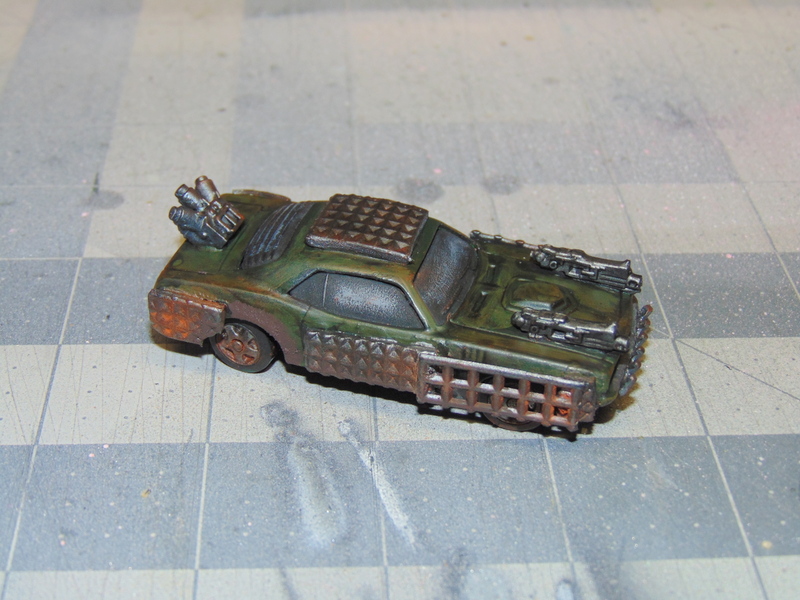
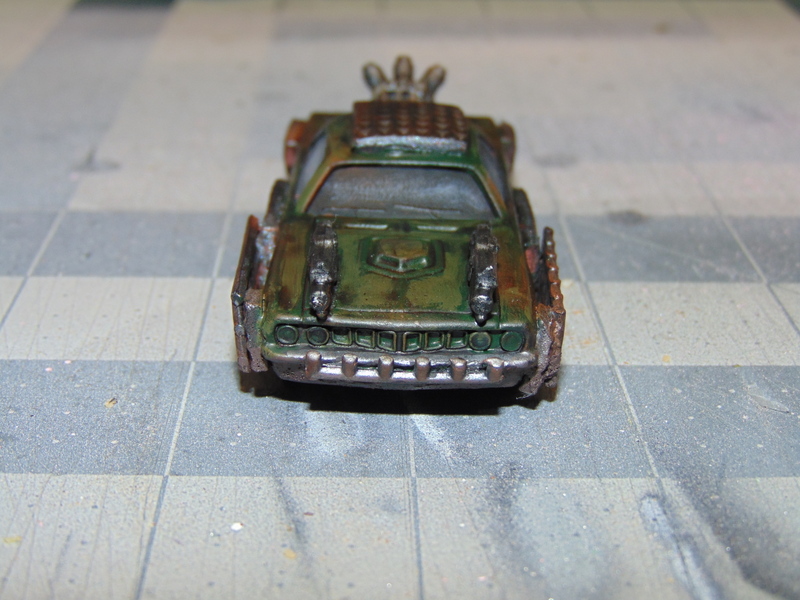
I used a mixture of Vallejo, Cote D’Arms and GW paints. I based the car in Military Green (V) and highlighted it with Cayman Green (V) before giving it a thorough wash in Nuln Oil (GW). I painted the armor plating Gunmetal Grey (V) and the guns and wheel rims with Gun Metal (CD) and washed all the metallics with Armour Wash (CD). Then I liberally applied some MIG rust pigments to the armor sections and the rims. I used some Stirland Mud (GW) on the wheel wells and the front and rear bumpers. A light drybrush of Dawnstone (GW) on the windows, and that was that.And here he is, in all his grimy glory…Coughin’ Joe!

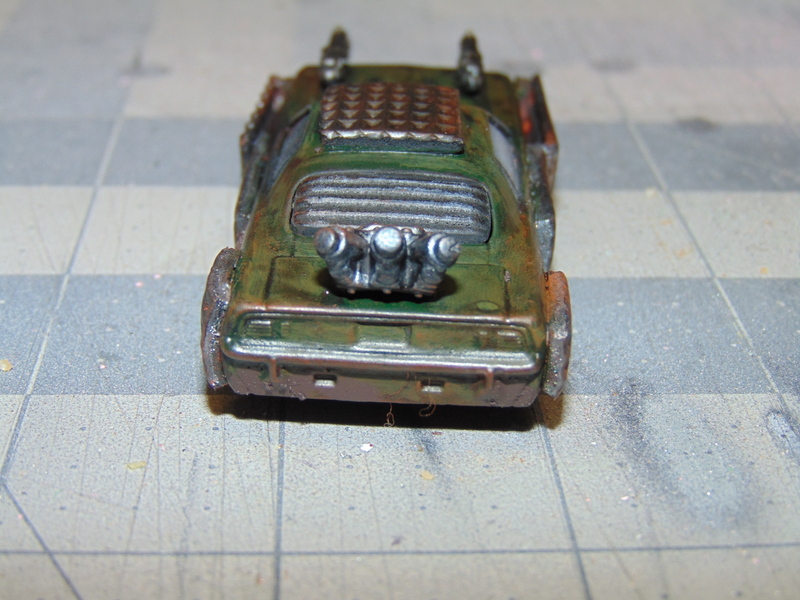
Rear view. Most people never see this on account of the thick black smoke pouring out of those launchers…

If you see this in your rear-view mirror, you’re about to get shot. A lot.

I read somewhere that it’s easy to get addicted to converting cars for Gaslands, and I am already hooked. I have a bunch of toy cars and bits scattered around my hobby space as we speak. More Gaslands conversions soon!


Poison Ivy

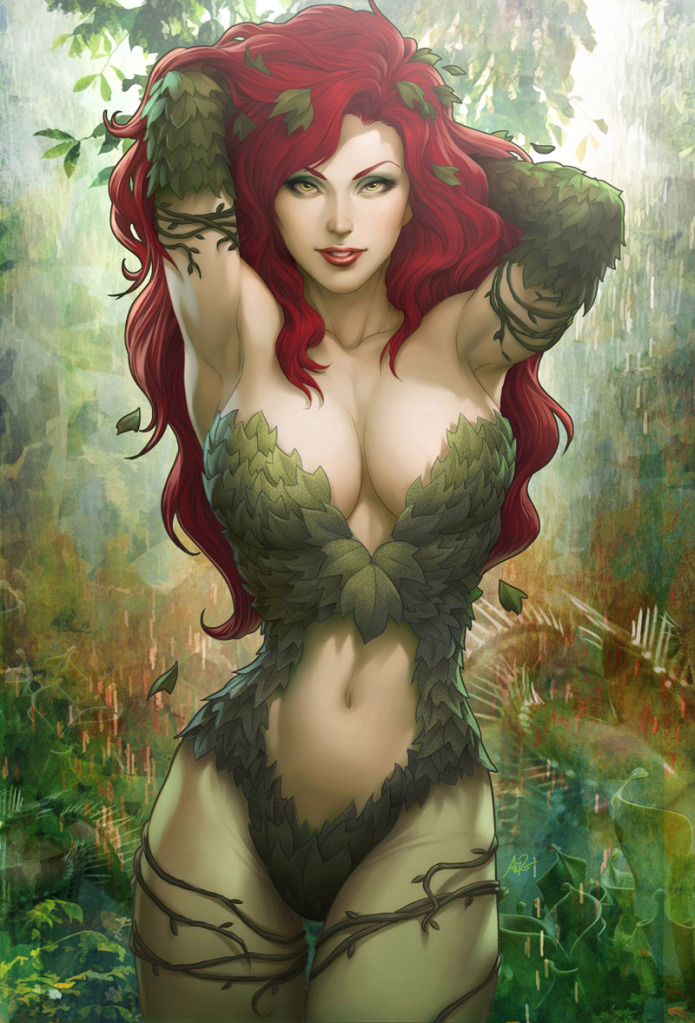
Poison Ivy has become one of my favorite Batman villains, although it wasn’t always so. (Take the movie Batman and Robin, for example; like Arnold Shwarzenegger’s Mister Freeze, the less said about Uma Thurman’s portrayal of Ivy, the better.) I didn’t really start to like her until the Batman: The Animated Series episode “Harley and Ivy”, in which the two ladies team up to take over Gotham’s crime scene, at least until Batman and the Joker find out about it.

Ivy appears in all but one of the Rocksteady Batman: Arkham series of video games, of which I am a huge, obsessed fanboy. And now, with a particularly cold-blooded version of Poison Ivy running amok on the current season of TV’s Gotham, I thought it was a good time to feature her here.

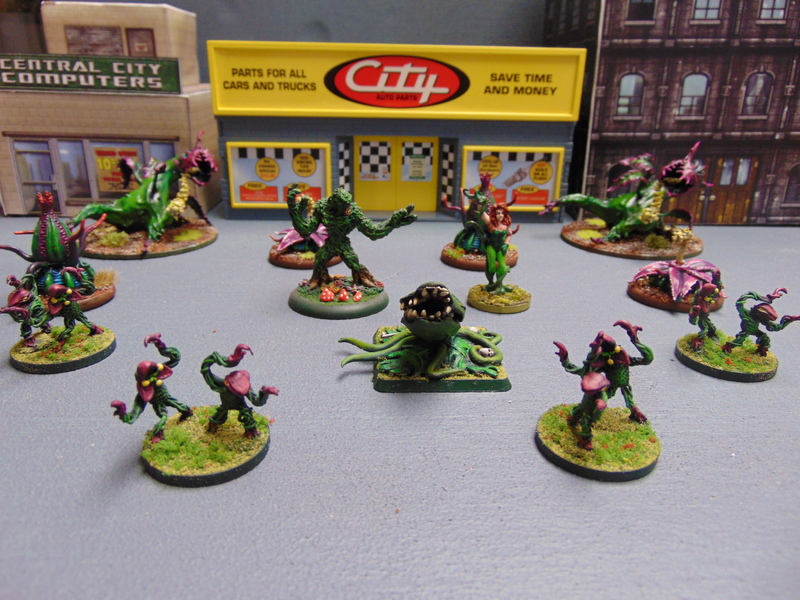
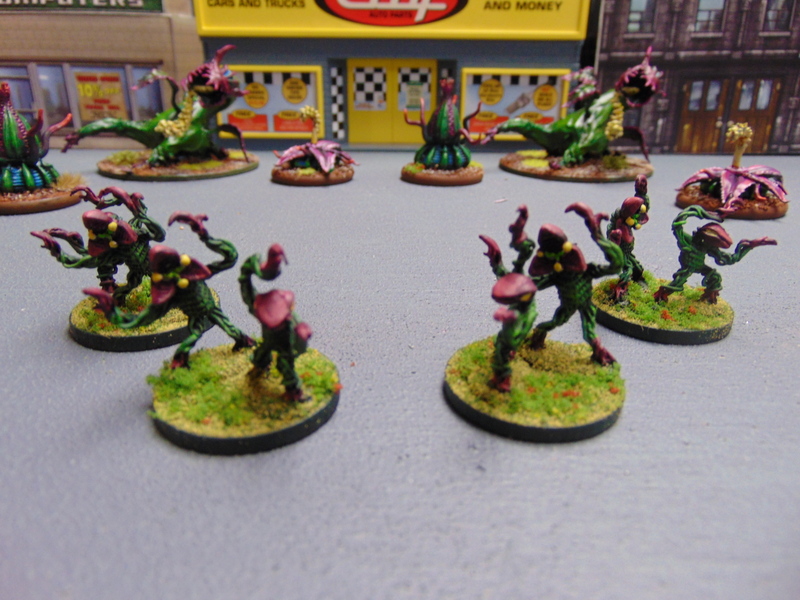
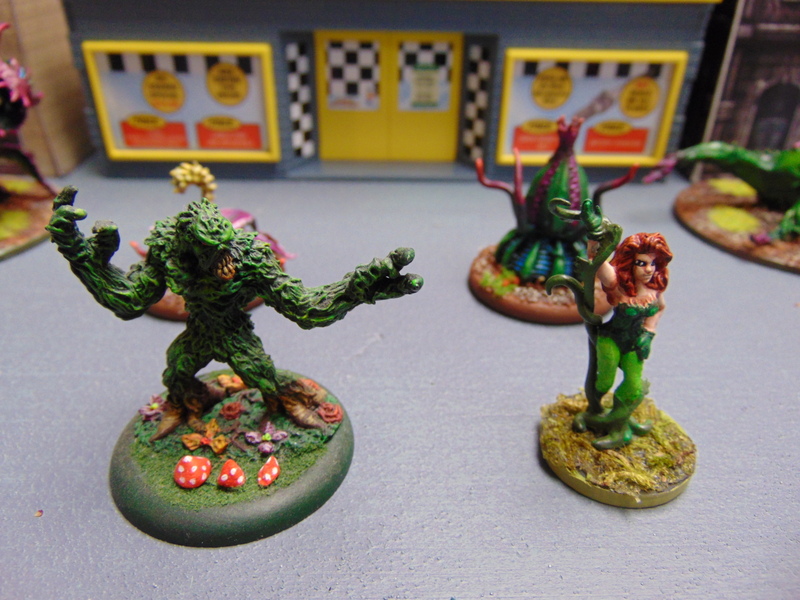
This repainted Heroclix Ivy is from the DC Cosmic Justice set. It’s the classic, early version of Ivy, before she got chlorophyll for blood and became more plant than human. I based her on a small piece of Spanish moss. Behind her are some of her pets: the big monster plants are Dragon Plants, new from Reaper’s Bones collection. The pod plants are also from Reaper Bones; they’re Death Star Lilies.  The big Man-eating Plant in the middle is from Armorcast.


The little plant people are Vardu Sprouts, from Hydra Miniatures’ Primal Dawn range. When I ordered them I thought they would be bigger than they are, but they’re sprouts, after all. I just based them two to a base. I plan on having the pod plants spit them out as a renewable source of plant henchmen.

Lastly, the big guy is an old version of Reaper’s Swamp Shambler. I painted him years ago, and he looks a lot like a certain…bayou-dwelling…Plant Elemental…known for…punctuating…his speech…with lots…of…elipses…but in this context he’s Ivy’s bodyguard, should Batman ever get too close. He’s better than that horrible version of Bane in Batman & Robin, anyway.

Man, was ANYTHING in that movie any good? No. Not a thing.

Anyway, here is my Super Mission Force build for Poison Ivy:

Poison Ivy (Wild Card) Minor: Barrier, Entangle, Summoning, Telekinesis

I can hear some of you already: “Now hold on a second, Angry Piper! Barrier and Entangle, I can see. But since when does Poison Ivy have Summoning and Telekinesis?”

To that, my friends, I would say you must think outside the box a bit. What is Poison Ivy’s main power? Plant control. Unfortunately, there is no plant control power in SMF. Ivy can get plants to do a lot of stuff, like entangle enemies or form barriers…or grapple enemies at range with super strength, bear herself aloft to higher elevations (a’ la Jack and the Beanstalk), or manipulate objects at a distance using plant-y tendrils. (In other words: Telekinesis, only using the plants instead of her mind.) She can will plants to fight for her and pretty much instantly mutate normal plants into killing machines. Kind of sounds like Summoning, no?

Of course, if you don’t like my version of Poison Ivy, you could substitute some or all of these powers with others you may find more thematically appropriate, like Armor, Damage Field, or Enhanced Senses, to name a few. When using Ivy in a scenario, I would let her have a few plant guardians and/or henchmen in place at the start of the game. She’s really not that tough, otherwise; and she would likely be defeated before she could use her powers to summon reinforcements. Just my 2 pesos.


“Asteroids do not concern me, Admiral…”

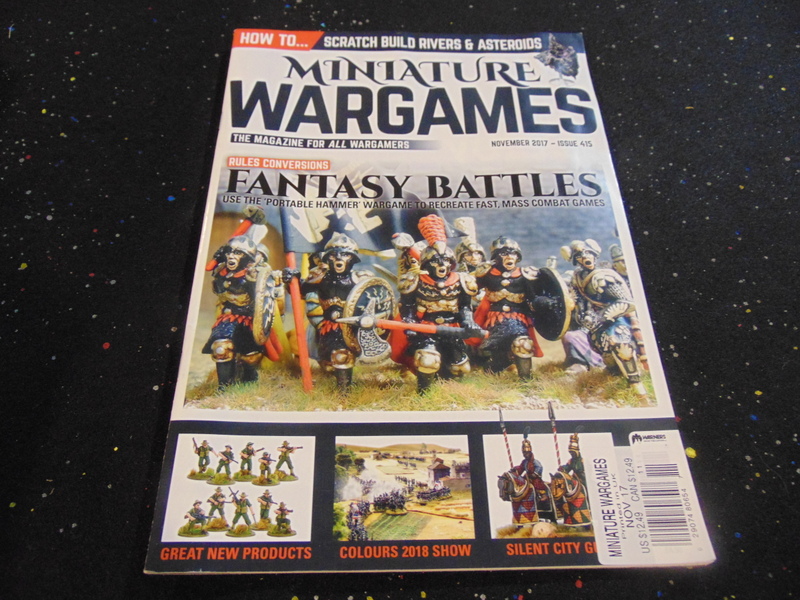
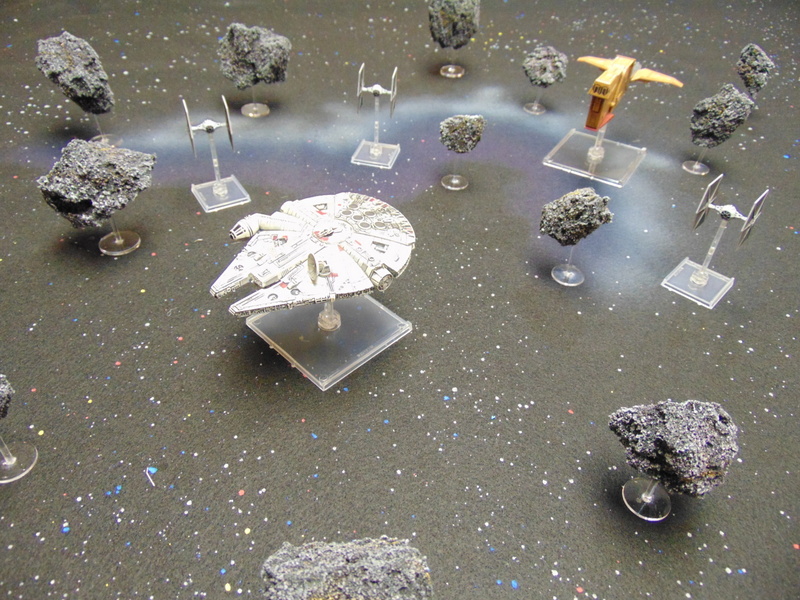
I really like the new direction of Miniature Wargames magazine, particularly the monthly “Darker Horizons” fantasy and sci-fi feature. I’m also a fan of Diane Sutherland’s monthly scenery-building articles, as I like any good scratch-building tips. A couple of months back, John Treadaway penned an article on how to make cheap and easy asteroids for space combat games. The article is well worth a read, and John’s method couldn’t be easier. I encourage anyone in need of asteroids to track down the issue above.

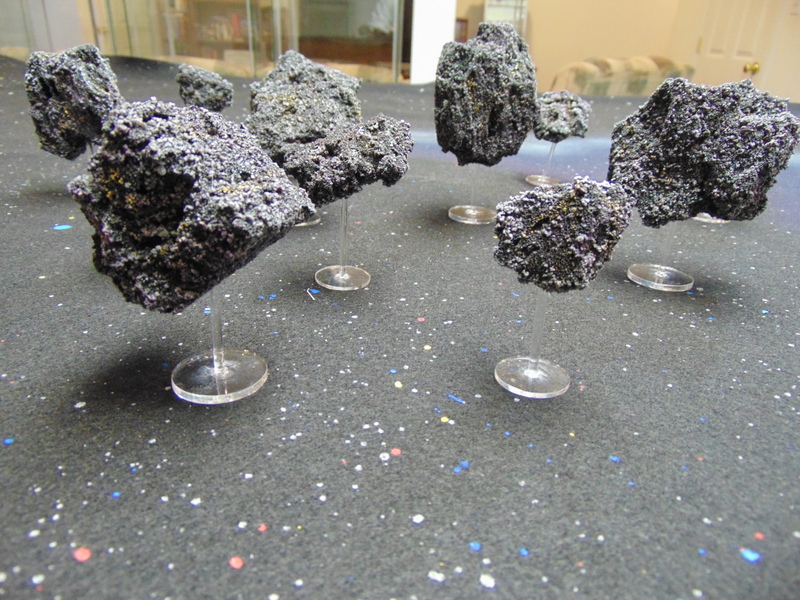
I’ve been looking for a good method of asteroid construction for some time, and like many folks, I’ve considered everything from wood chips to lava rocks to just breaking down and buying some manufactured scenery, such as those offered by Battlefield in a Box. Then I saw what John did and I practically facepalmed myself at its simplicity. Put simply, John uses sponge chunks soaked in a mixture of paint, glue and sand. Let dry, drill holes, insert the flight stands of your choice (mine are from Litko), drybrush and done!

Here are the results. Lightweight, nigh-indestructible and pretty darn good-looking asteroids. I followed John’s method, including his idea for using a purple wash to add a bit more tone than mere drybrushing can achieve. I also added a few metallic streaks here and there to simulate metal veins, but that’s just me. My asteroids had a bit more time to dry than John’s, since I had to order the flight stands and wait for them to come in (about a week or so).

Here’s how they look with some War Rocket and X-Wing miniatures.

Imperials vs. Galacteers


“NEVER tell me the odds!”
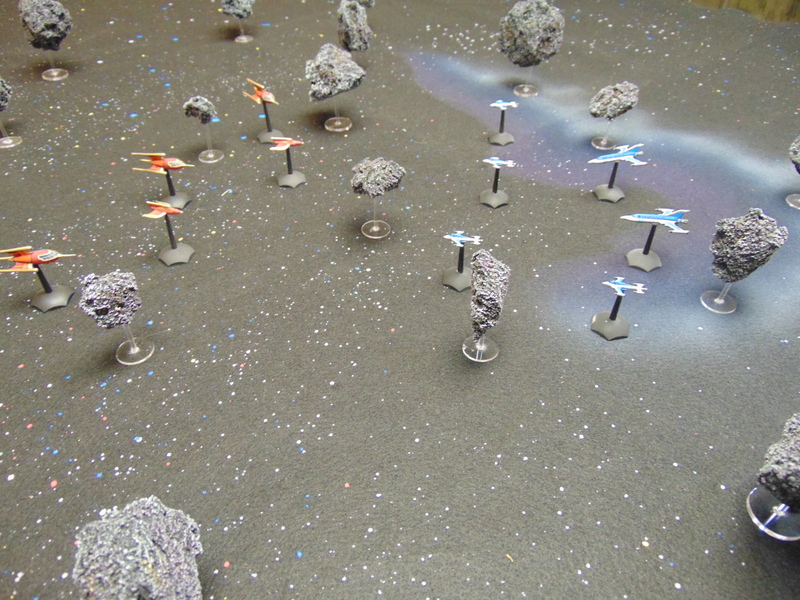
 

Sure beats the crap out of cardboard templates. And it only took a couple of hours (not including drying time). Thanks, John!


Imperial Bunker

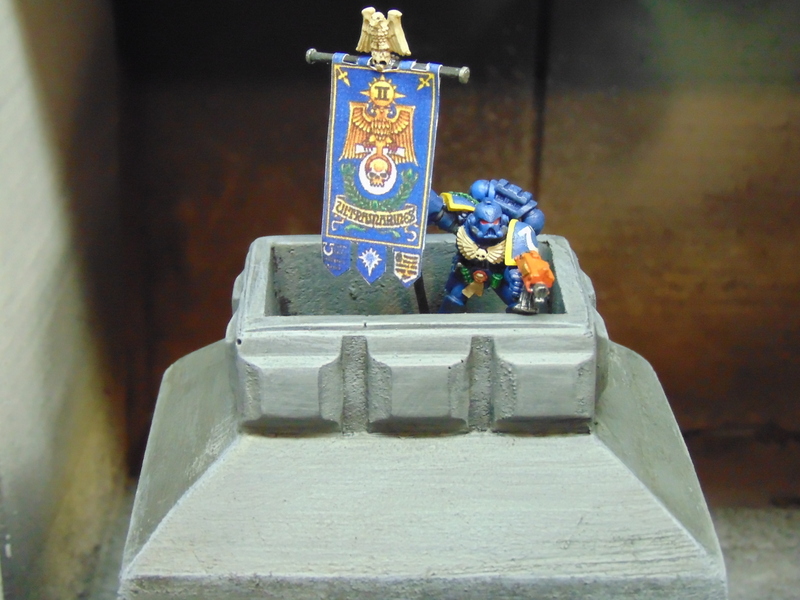
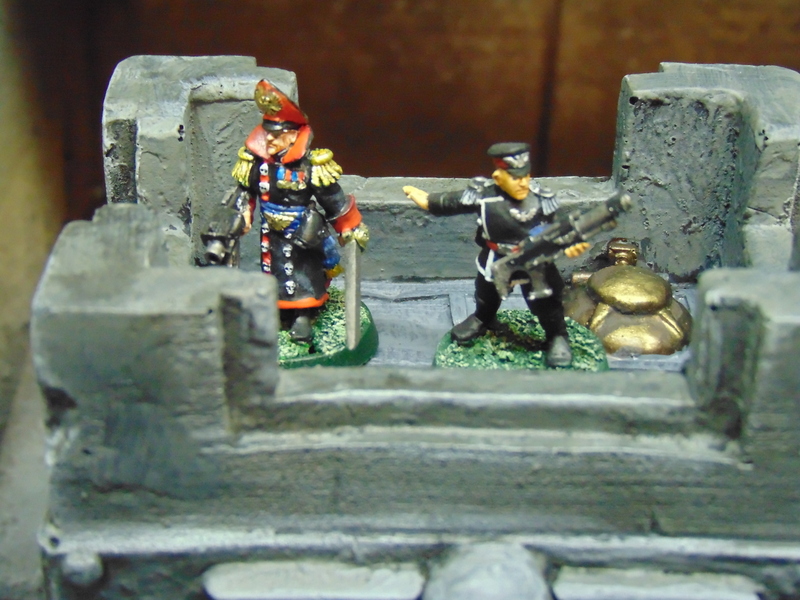
It’s been a while since I’ve posted anything. Time to jump back in the pool with a piece of terrain I’ve had for about 12-15 years or so. It’s an Imperial bunker I bought for use in Warhammer 40,000.

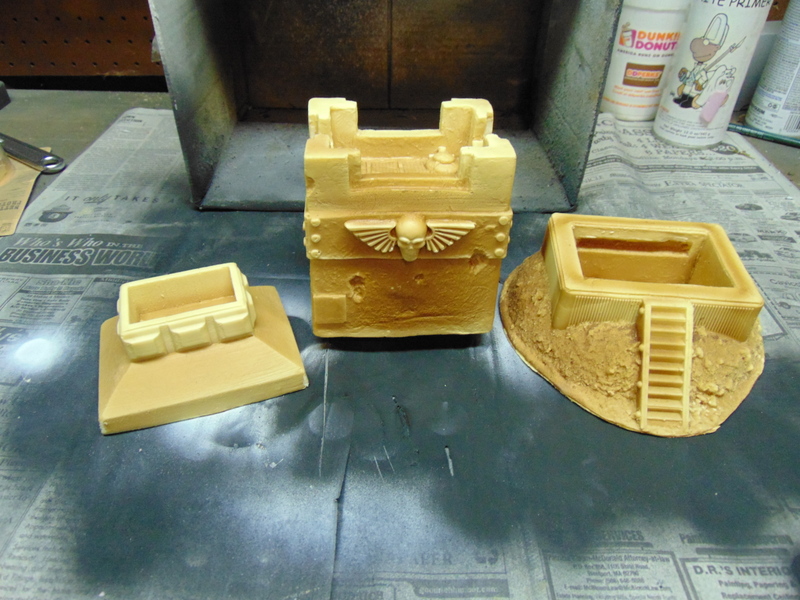
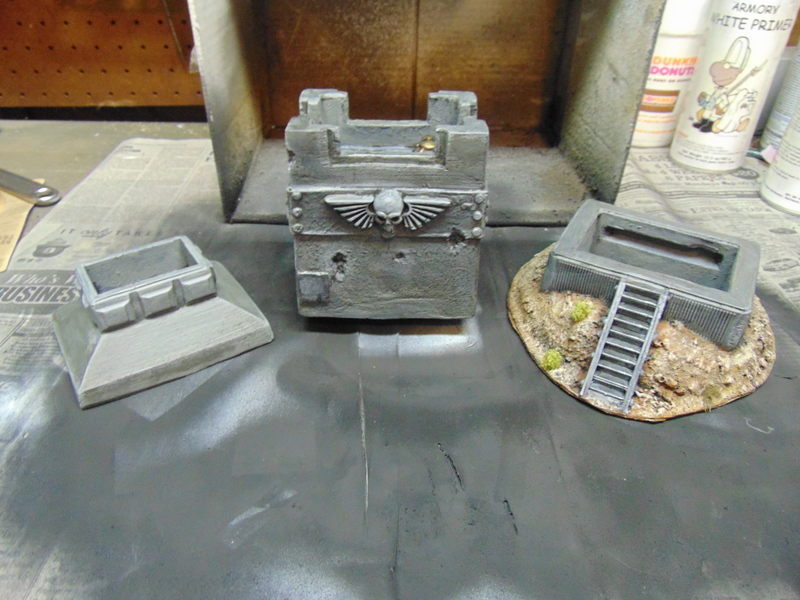
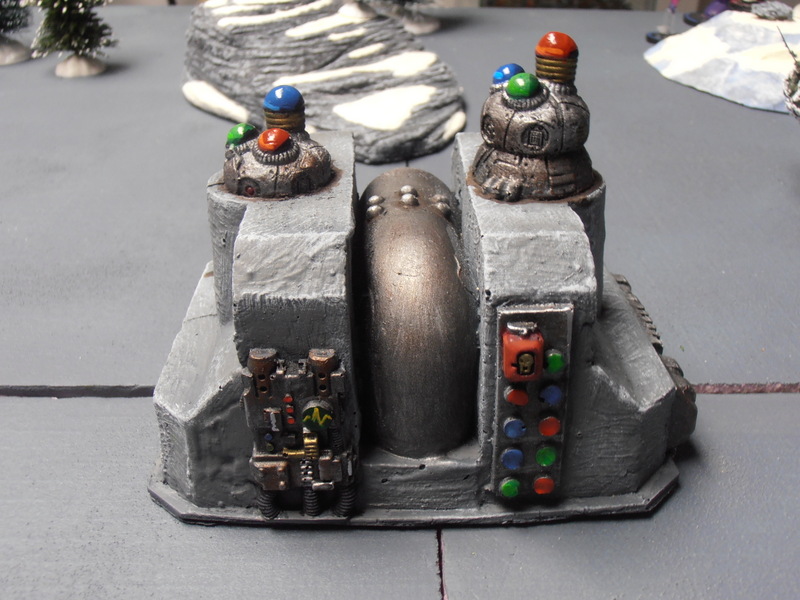
I have a few pieces of terrain cast from the same material. It feels like solidified Great Stuff (spray insulation), but a bit stronger. Looking closely, I can see it was made by a company called “Epicast”. The “Breeder Bomb” was also one of these pieces. As you can see, the bunker comes apart into 3 pieces, so it’s possible to put miniatures inside the balcony and on the roof.
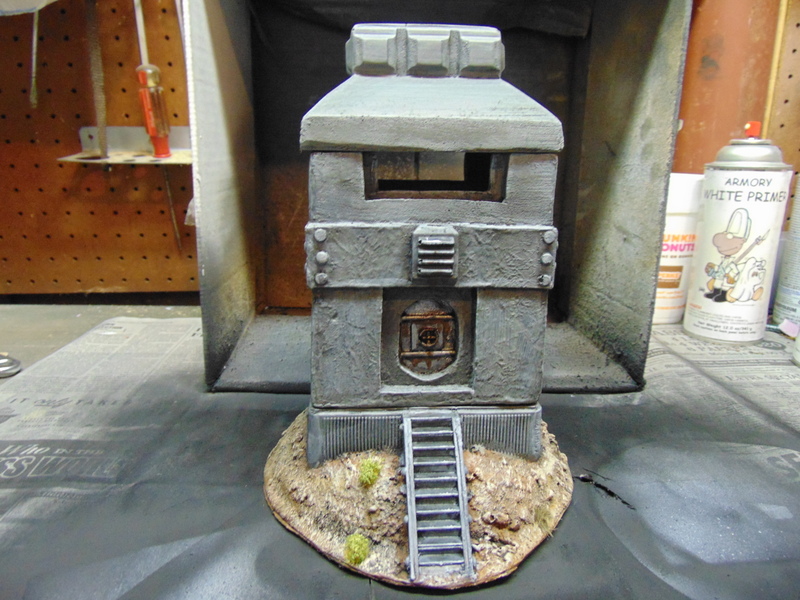
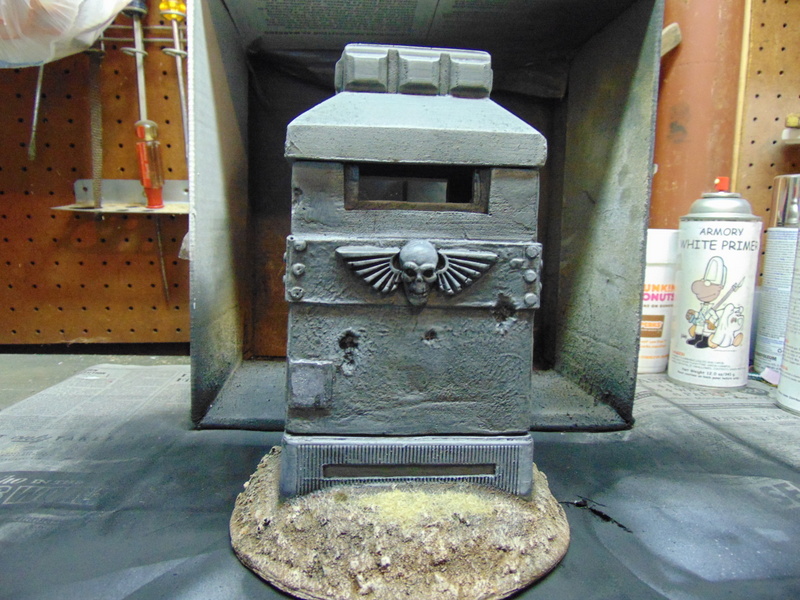
Anyway, as you can see, it painted up pretty easily. It took me about an hour to apply the craft paint, shade and highlight it, and add some base turf here and there. Here’s what it looks like finished, front and back:

It seems to be a bit high for a bunker, but a bit too small for a fort.

An Ultramarine standard bearer from my first ever 40K army, circa 1994 or so. My marines were primarily beakies from the Rogue Trader boxed set. Guys like this were considered “new” at the time. I remember he retailed for $6.50.

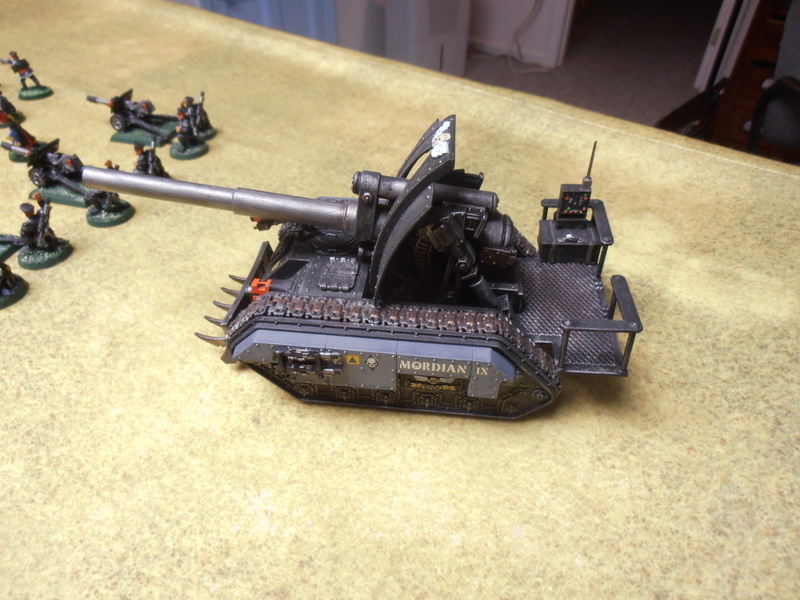
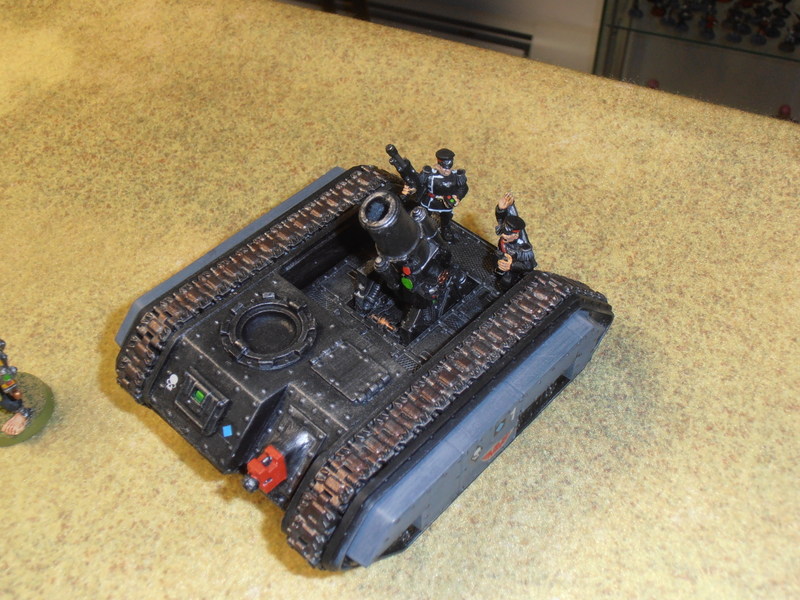
A couple of Imperial Guard (yes, I said Imperial Guard, not Astra Militarium!), a commissar and a Mordian trooper, from my main 40K army, the Mordian IX.  The roof has been removed and they’re in the balcony.

Sadly, since I no longer play 40K, it’s unlikely I’ll ever use this piece in a game. Tough to use it for anything else, either, considering that big skull just screams GW. Still, it’s good to get it painted up after all these years.

Imperial Assault Finally Finished! (Sort of…)

I started painting Fantasy Flight Games’ Imperial Assault last year in May. One would think I would have finished this project long ago, but my PADD (Painting Attention Deficit Disorder) constantly worked against me and I found myself juggling many projects at once, none of which were (or are) close to complete. Well, after my last post a couple months back, I decided to buckle down and finish Imperial Assault before doing anything else. My friends were exasperated with me for insisting on playing with painted miniatures, but at long last, the core set and several expansions are done.

Before we dive in, I would like to plug Sorastro’s Painting, a Youtube Channel that details the painting of most of these figures below. For the most part, I followed Sorastro’s method with only minor departures. In addition to Imperial Assault, Sorastro also has tutorials for Zombicide and Descent miniatures. He’s a very good painter with a lot of helpful tips, and the production standards of his tutorial videos are really  amazing. Check him out!

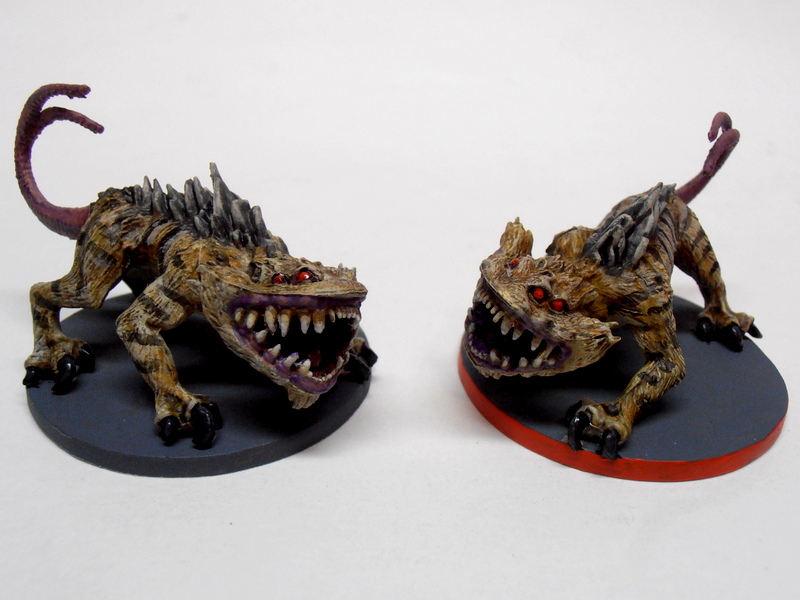
First up, the rest of the Imperial Faction. Above are the Nexu, some kind of nasty beastie that I think only appeared in Attack of the Clones. I seem to remember one of them from the arena scene even though I only saw that abysmal movie once. They’re pretty cool sculpts and to be honest, without Sorastro as a guide, my Nexu would have likely looked like crap. I like them now, though.

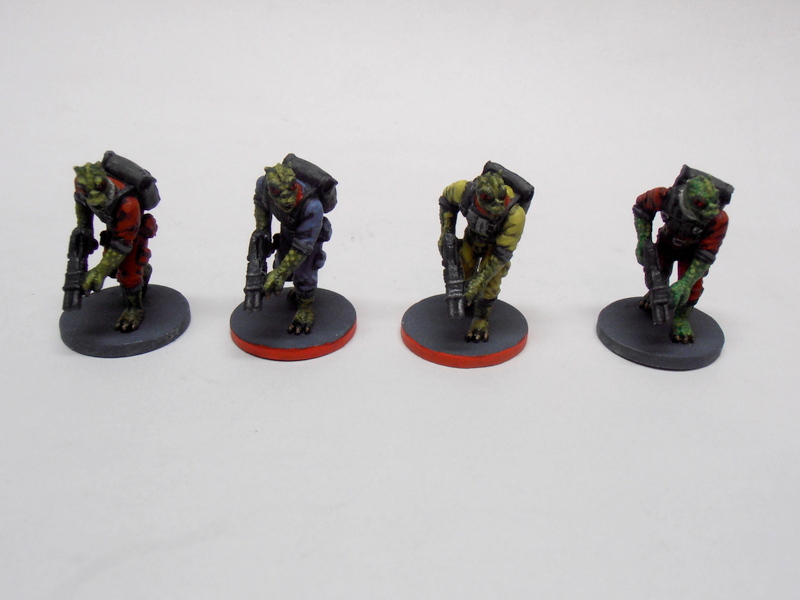
Up next are the Trandoshan Hunters. Sorastro wanted one of the veterans to be Bossk, and I liked that idea too. (Of course, now there’s a special Bossk expansion figure in the Bespin expansion, but whatever). I chose basic solid colors for the fatigues as I didn’t want to paint camouflage. All in all, I found these guys to be the least fun figures to paint in the core set, but YMMV.

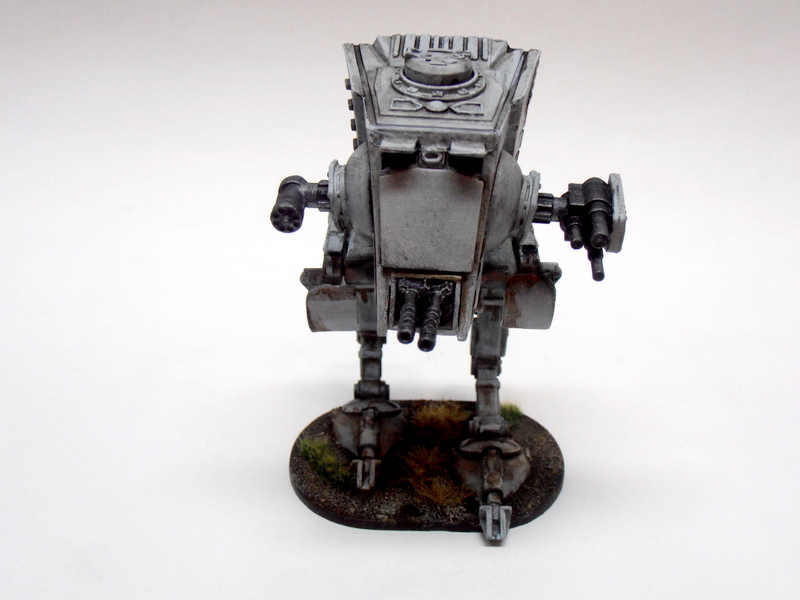
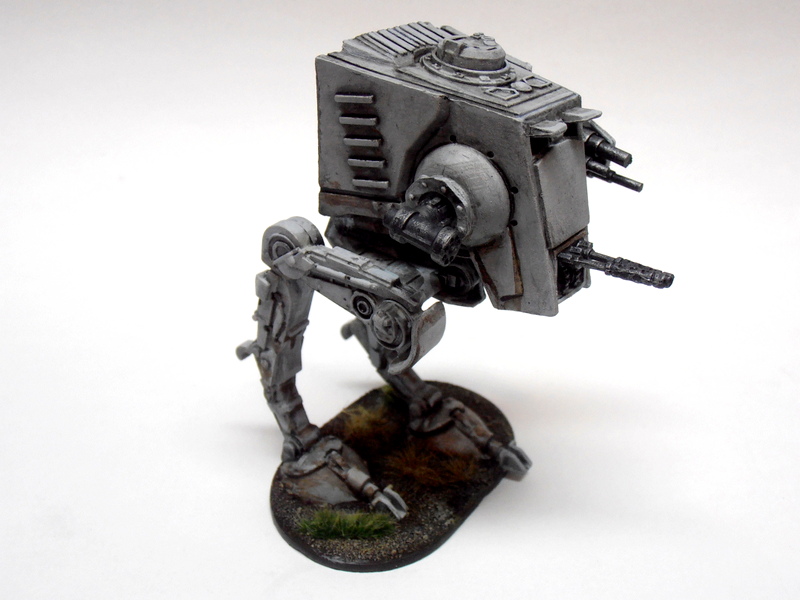
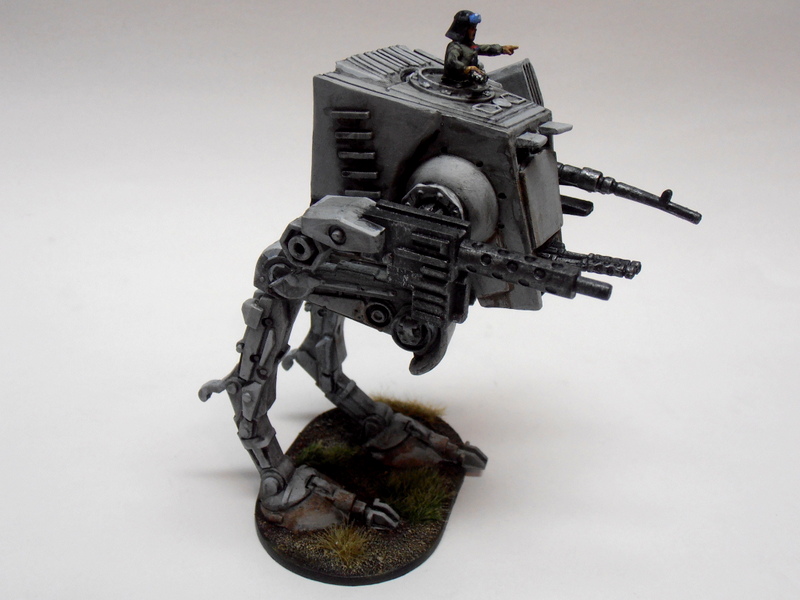
The AT-ST was one of the easiest miniatures to paint, and once again, Sorastro gets the nod as he used a very effective method of washing and wiping to achieve the end colors. He also introduced me to my new favorite paint, GW’s “Typhus Corrosion”. I probably wouldn’t have bought this on my own, but I love the grimy effects it creates. The AT-ST was the only core miniature that I decided to base decoratively, because I thought it would look crappy on a plain gray base.

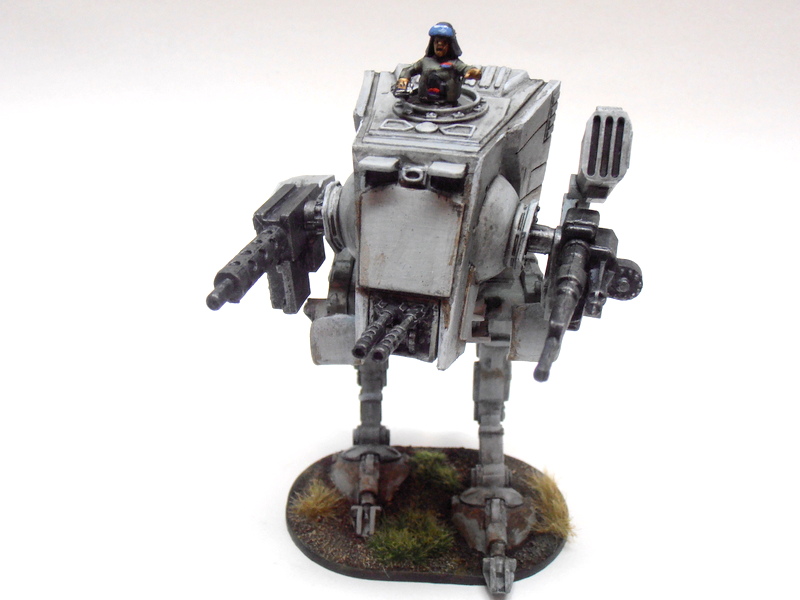
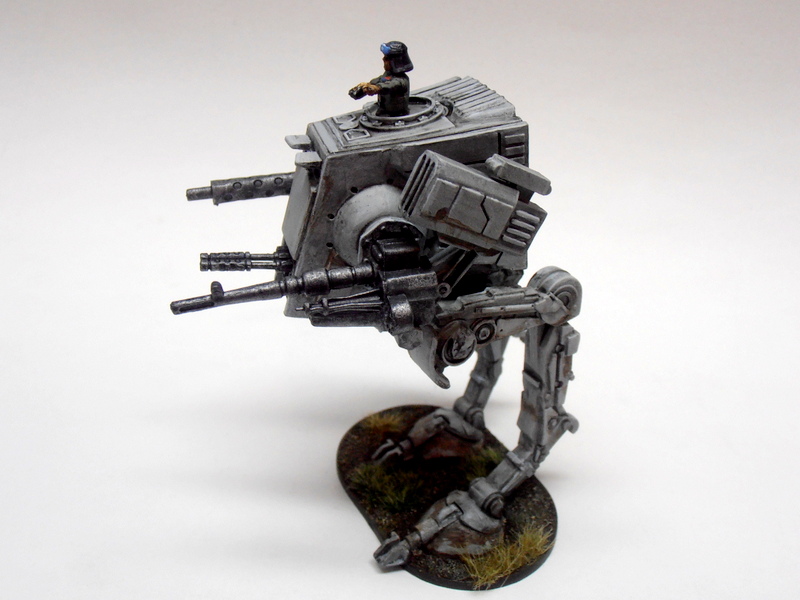
Our first Expansion Pack, General Weiss. Painted pretty much the same as the AT-ST above. General Weiss is a guy who likes his guns, obviously. Probably that’s because he’s got a bit of a Napoleon complex due to his unfortunate size. His body is so out of scale with the other humanoid figures that I considered building the modified AT-ST and leaving him off it, but in the end I decided to include him. Once again, I put some effort into the base because of the model’s size.

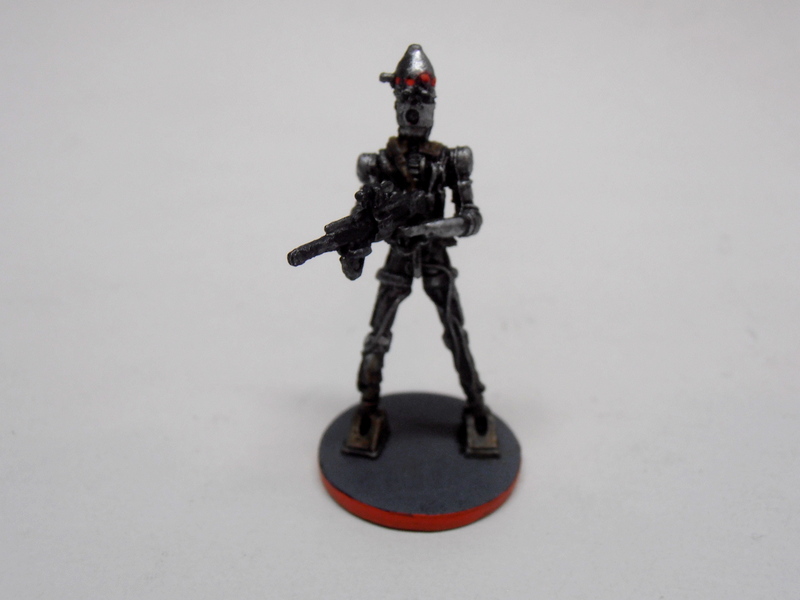
The next Expansion Pack is the bounty hunter, IG-88. Although he’s a popular character, I would have thought Fantasy Flight would have released Boba Fett in the first wave of expansions rather than IG-88. Still, he’s cool and fun and easy to paint, and he looks a lot cooler than using the cardboard token included in the core game.

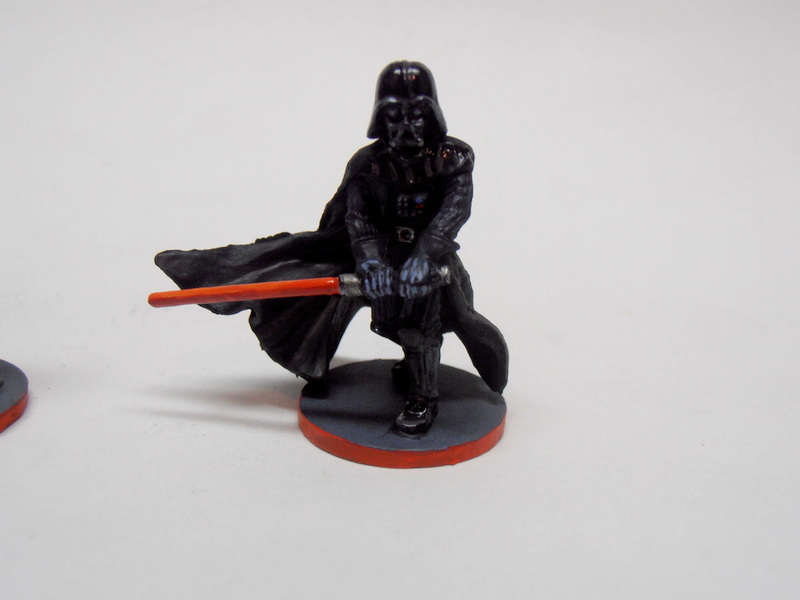
Finally, the Dark Lord himself. Vader is technically another “Expansion Pack”, but he comes in the core set along with Luke Skywalker. FF probably does this to tempt you into replacing those tokens with actual miniatures (it works.) When painting this miniature, I departed from Sorastro’s tutorial significantly. Not because I didn’t like his result, but because it was too time consuming for me and also a bit daunting. Sorastro highlighted his Vader to death and added some cool lighting effects from the lightsaber, neither of which I wanted to do in order to save time. ( I had already taken enough time to paint this game!!!) His results are much better than mine, but I’m perfectly content with my Darth Vader.

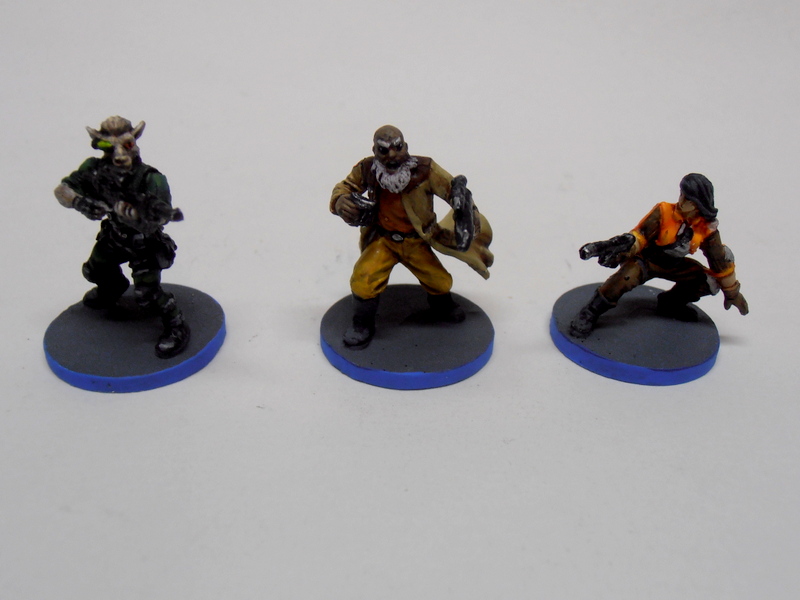
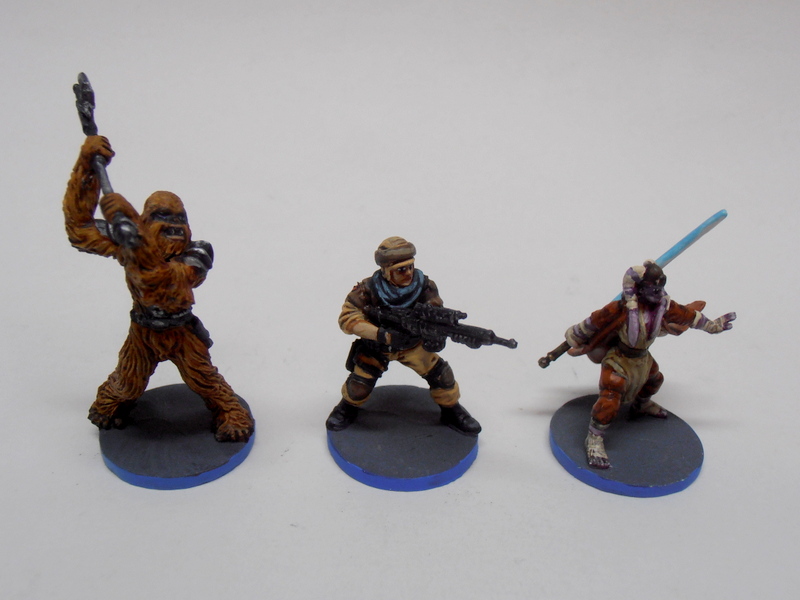
Finally, the Rebel Scum!! From top to bottom, L-R: Mas Esh’karey, Gideon Argus, Jyn Odan, Ghaarkan, Fenn Signis, and Diala Passil. I found Fenn Signis to be the most fun to paint, and Diala the least. Once again, I departed from Sorastro on the lightsaber effects (i.e. I chose not to include them).

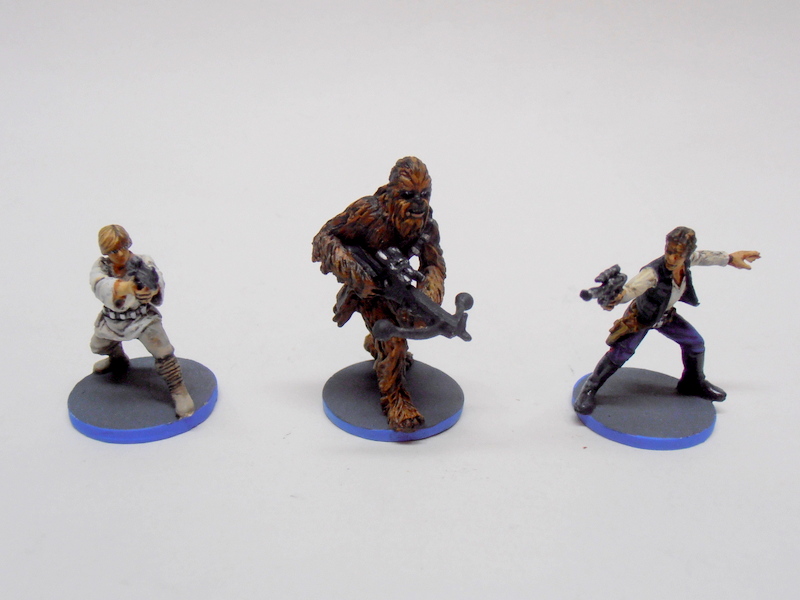
Some familiar faces: Luke Skywalker (included in the core game), Chewbacca and Han Solo. Chewbacca was a blast to paint and all three of these miniatures are terrific representations of these iconic characters.

Lastly, some generic Rebel Troopers. These were the last miniatures I painted and they took very little time. Sorastro hasn’t posted a tutorial for them yet, but they were easy to paint based on source material (i.e. Google).

The only wave one miniatures expansions I haven’t bought or painted yet are the Rebel Saboteurs and the Emperor’s Guard Champion, but they can wait. I’ve decided I probably won’t be buying any of the game expansions (like Hoth or Bespin), but I may buy some of the miniatures expansions (like Boba Fett and R2 and 3PO) just to paint them, or perhaps to use in skirmish play.

Now I can finally play the game!


Painting Imperial Assault: Part Two

DSCN1624

I got distracted by other painting projects and Imperial Assault kinda fell by the wayside. However, since I’m not playing the game until I paint the miniatures (and since my friends are aggravated by this), I figured it would be nice to have the game done by the time The Force Awakens hits theatres on my birthday.

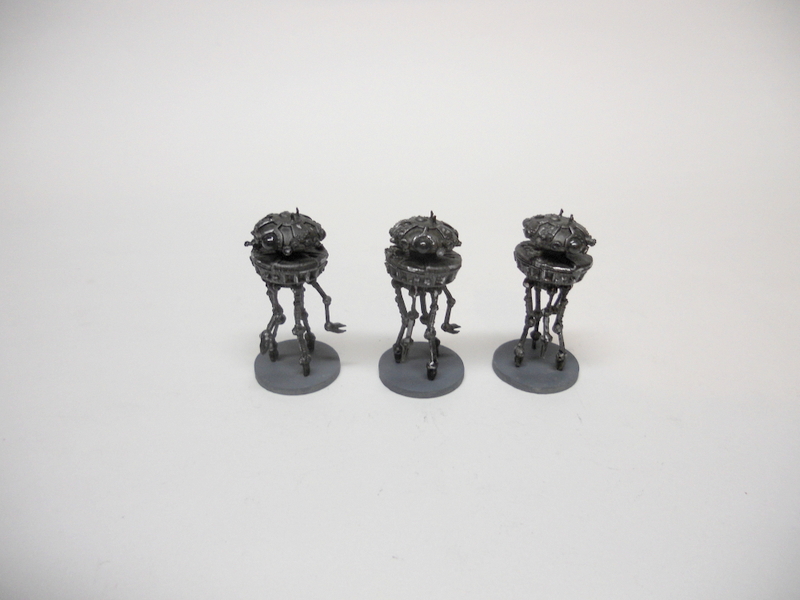
In the meantime, I discovered some  terrific Imperial Assault painting tutorials on Youtube by a guy named Sorastro. A link to his Youtube channel is here. The production value on his tutorials is really great and he gives some pretty helpful painting tips for each and every Imperial. Assault miniature. (Plus, he has a soothing, non-threatening British voice.) The Probe Droids above were pretty much painted exactly as he did them, and I’m quite happy with the results. I would have done them differently had I not stumbled onto his tutorials, and I don’t think they would have looked as good.

Sorastro uses Citadel paints exclusively, but with a little tweaking you can find equivalent colors from most of the major paint companies.

DSCN1622

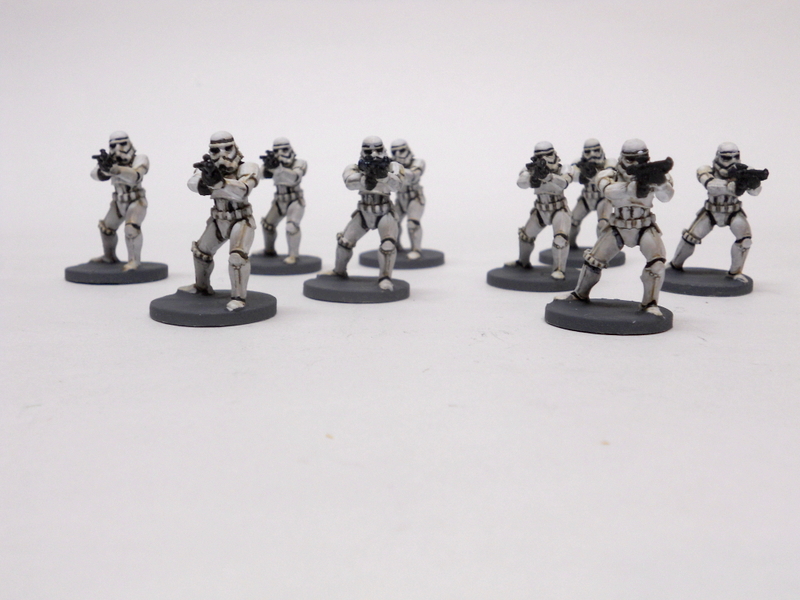
Up next are the Stormtroopers. I painted these guys before I found Sorastro’s channel, and I wish I hadn’t. These give a further example of Sorastro’s useful techniques. He got much better results than I did in about half the steps. I’m not wholly happy with these troopers, but I can live with them. Here’s how I painted mine:

I primed them white, then dipped them in Army Painter medium dip. Once dry, I painted all the white areas with Reaper’s Polished Bone. I keylined the larger black areas with black, leaving the smaller ones shaded with the dip. Then I highlighted the bone areas with white and touched everything up a bit. (I hate trying to shade white, so I figured this was a good way to do it.)

In contrast, Sorastro primed the miniatures white, then gave them a dark wash, effectively using the primer as the first coat. Then he built up the highlights with coats of thinned white paint. I would never think to do this, even after 30 or so years of painting. You don’t use primer as a first coat, you paint a first coat onto the primer, or so I was firm in my belief. But Sorastro’s Stormtroopers look way better than mine, so I bow to the Buddha in him. His Stormtrooper tutorial is here.

DSCN1620

To show the difference, I used Sorastro’s method on these E-WHB Engineers. I think they came out much better than the Stormtroopers. Primer as a base color. Who’da thunk?

My first Imperial Assault miniatures are here. Now I have only the Nexu, Trandoshan Hunters and the AT-ST to paint to complete the Imperial Faction. Then onto the Rebels, and finally I can play the damn game!


Armies of Yesteryear: 40K Mordian Iron Guard

Once again, a look back on my old armies. This time it’s my favorite old Imperial Guard faction: the Mordian Iron Guard.

What really drew me to the Imperial Guard is not really all that unusual: I wanted to field tanks and blow shit up.  I chose the Mordian Iron Guard because they were the chapter that appealed to me most, despite them not having any special characters in the Codex. (Actually, that appealed to me as well, as by the time I started playing Guard, special characters had fallen out of favor.) I never liked the Catachans, found the Rough Riders silly, didn’t really dig the Tallarns or the Cadians. And while I liked the Valhallans, I didn’t want to deal with snowy bases. (An old acquiaintance had a killer Valhallan Ice Warrior army complete with custom sentinels that was really cool, however.)

This army was my main Warhammer 40K army for most of the late 90’s -2003 or so. In choosing my army I decided that I would not field any Abhuman troops like Ratlings and Ogryns. I would use lots of base troops and have as many Commissars as possible to keep order and hopefully lend a little strength to squads in melee. I’d augment the core troops with fire-support and stormtrooper squads, and tanks tanks tanks!

And that’s what I did.

OLYMPUS DIGITAL CAMERA


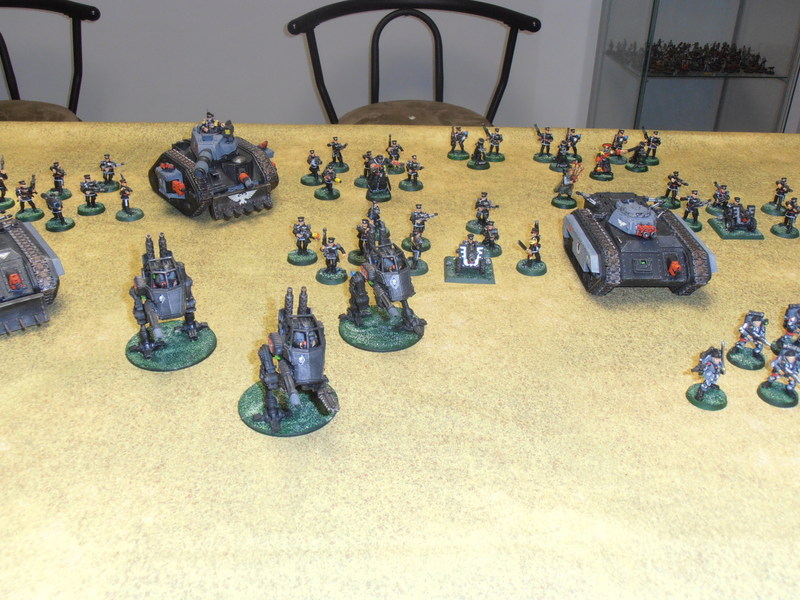
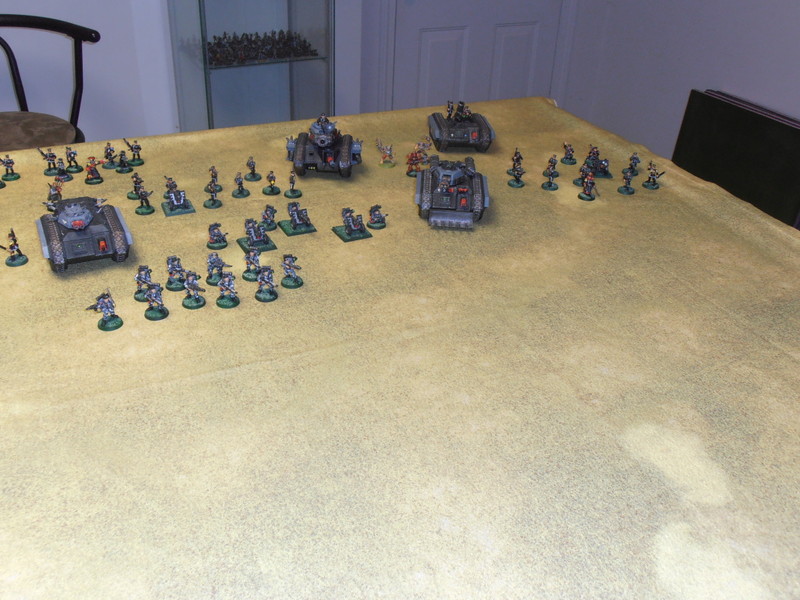
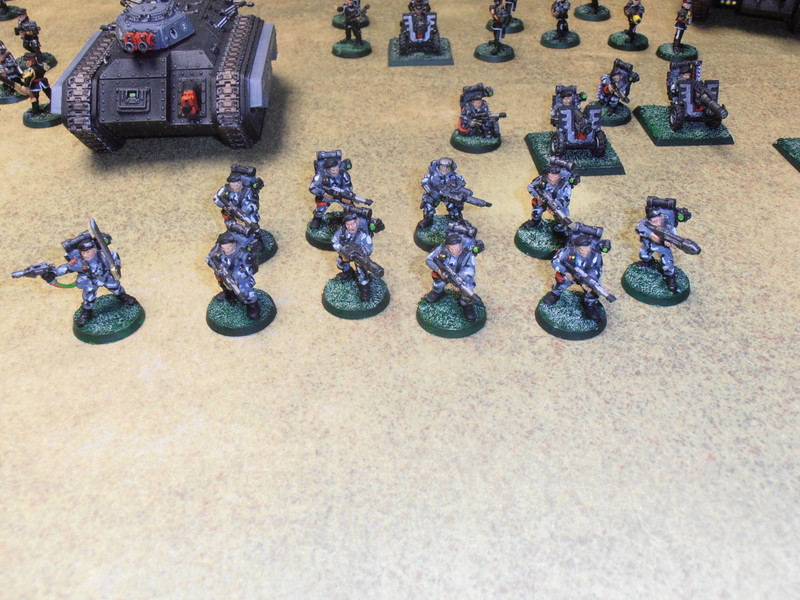
Starting off in the front is a squad of pre-Kasarkin stormtroopers. These guys came 6 to a box and were all plastic. You had to buy your special weapons and command separately. Behind them is a standard Infantry squad of Mordians led by both a Sergeant and a Lieutenant. Behind them is an anti-tank battery of 3 Lascannon teams. Way in the back is a Basilisk Heavy Support Tank. Over on the right is a Chimera, deploying an Armored Fist Infantry Squad.

OLYMPUS DIGITAL CAMERA


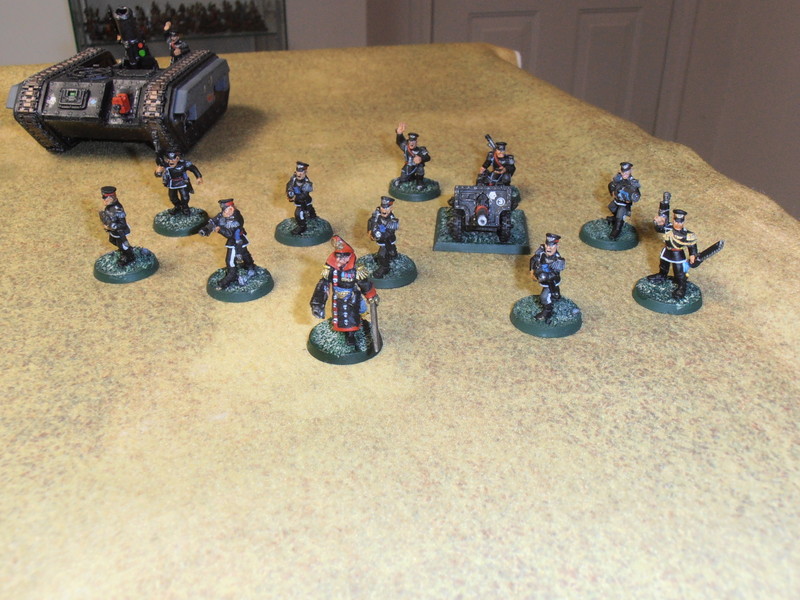
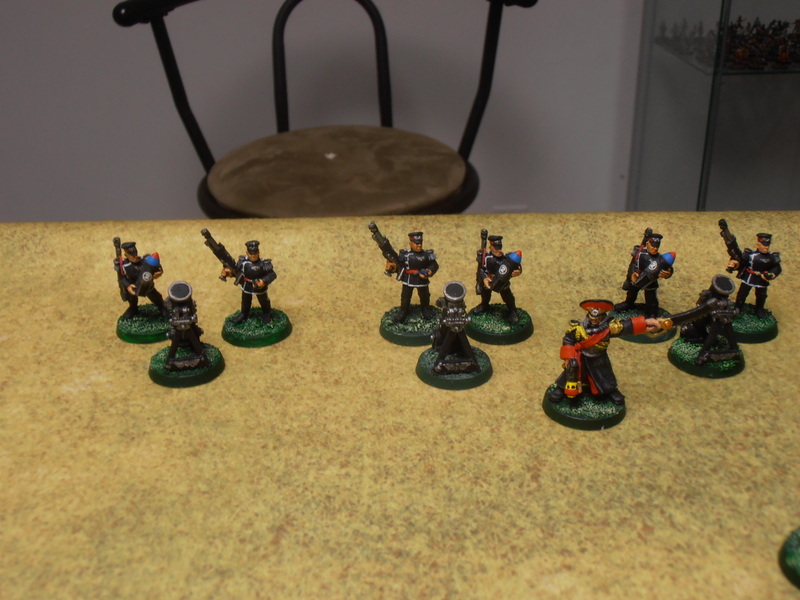
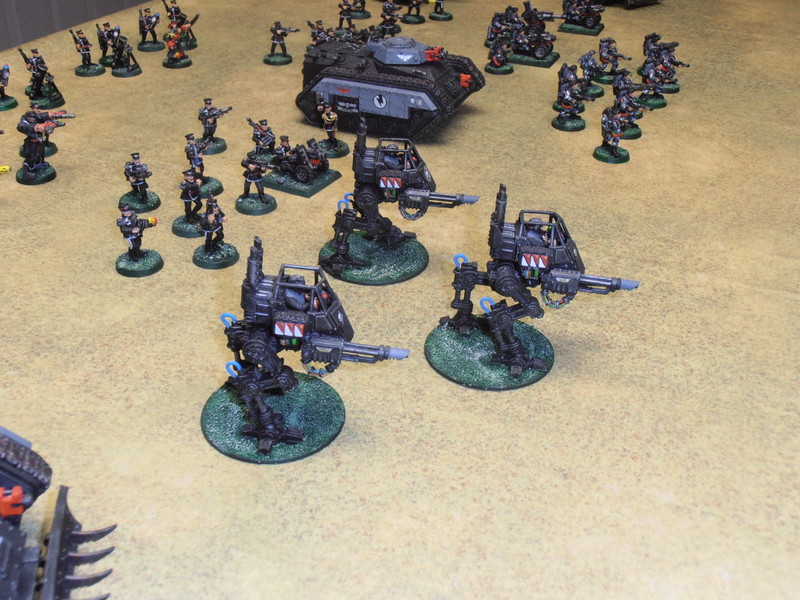
Continuing, my Sentinel squad is in the forefront of this picture. (My sentinels never did anything but get shot and blow up, usually by Turn 2. But they look so cool.) Behind them is another Infantry Squad. Farther back from left to right is a Leman Russ Battle Tank, the Command Squad (more on that later), and a Mortar Battery led by another Commissar. On the right is a Chimera with a Forgeworld twin-linked heavy bolter turret. Better than a multilaser any day of the week, and it looks better too.

OLYMPUS DIGITAL CAMERA

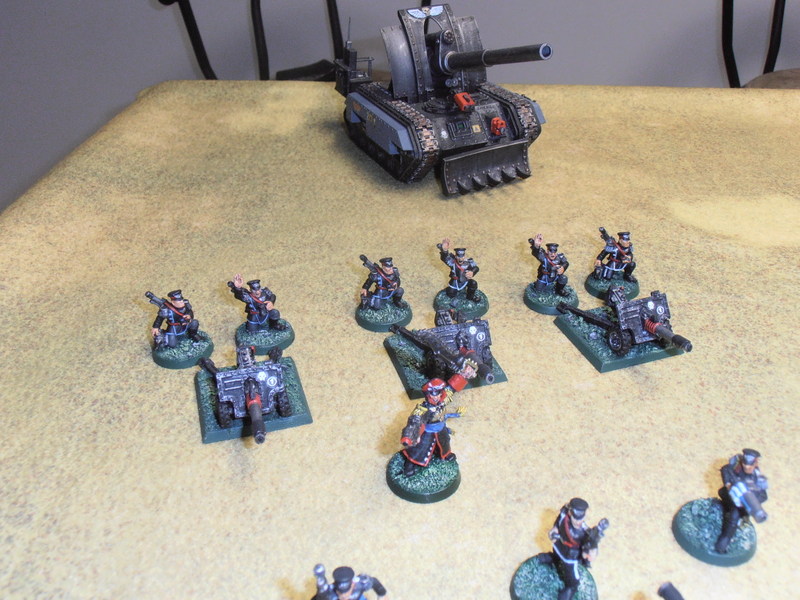
Rounding out the force are the rest: in front, another squad of Stormtroopers. I used to love to Deep Strike with these guys and tie up some enemy units long enough to rain death from above with my artillery. Behind them is a fire-support battery (2 heavy bolters and an autocannon), crewed by Stormtroopers. Behind them is yet another Infantry squad. To the right are three more tanks: a Leman Russ Demolisher, a Hellhound, and in the back, an old Griffon Heavy Mortar. Last but not least a final Infantry squad is on the far right, led by another Commissar.

OLYMPUS DIGITAL CAMERA

I would often deploy an Adeptus Mechanicus tech-priest and some servitors between my tanks, especially those I usually kept stationary, like the Basilisk, Griffon and Demolisher. Sometimes they could save or fix something, and sometimes they couldn’t.

OLYMPUS DIGITAL CAMERA

Close-up of the pre-Kasarkin Stormtroopers armed with Hellguns.

OLYMPUS DIGITAL CAMERA

A Commissar leads an Infantry squad on the flank.

OLYMPUS DIGITAL CAMERA

Close-up of the anti-tank Lascannon battery.

OLYMPUS DIGITAL CAMERA

You can never have too many indirect fire weapons. I love mortars. Nothing better than dropping a couple of templates on some Orks, Gaunts, or Eldar.

OLYMPUS DIGITAL CAMERA

My command squad. The Commander is a converted miniature from the defunct and short-lived game Cell. (Don’t tell GW he’s not “official”.) He towers over everyone else in the army and is almost the size of an Ogryn. (“Methinks I detect the influence of the Warp….”)

OLYMPUS DIGITAL CAMERA

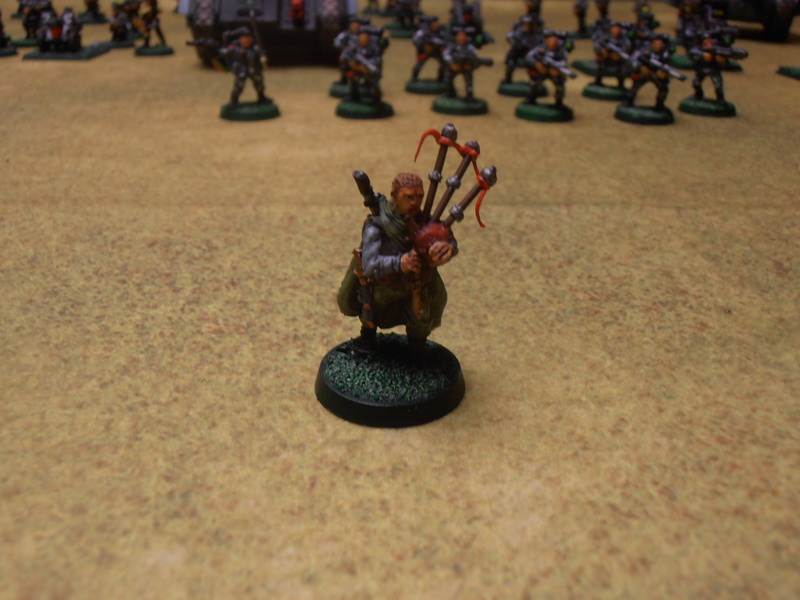
This is my Army Standard. I converted a Brin Milo miniature so that he wasn’t playing the Tanith pipes anymore. Then I used some 3/64mm brass rod to make the pipes. I used Squadron model putty (!) to sculpt the ferrules and the pipe sash and to beef up the bag (this was before I discovered Green Stuff). He was one of my first conversions ever and I still love him.

OLYMPUS DIGITAL CAMERA

Sentinels look bad-ass. Too bad they suck. You may also notice that none of the armor in this army has the slightest bit of mud or dust on it. That’s because it’s Mordian armor, dammit!

OLYMPUS DIGITAL CAMERA

Leman Russ Demolisher.  Boom.

OLYMPUS DIGITAL CAMERA

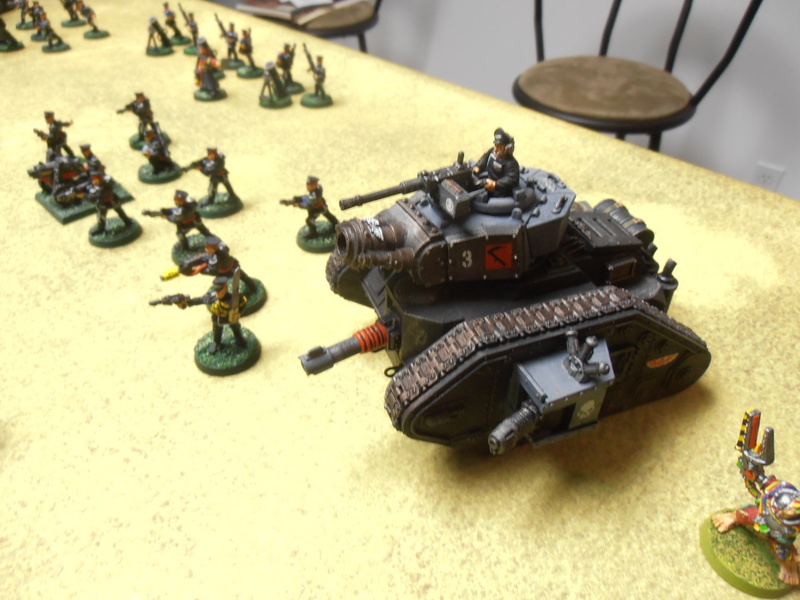
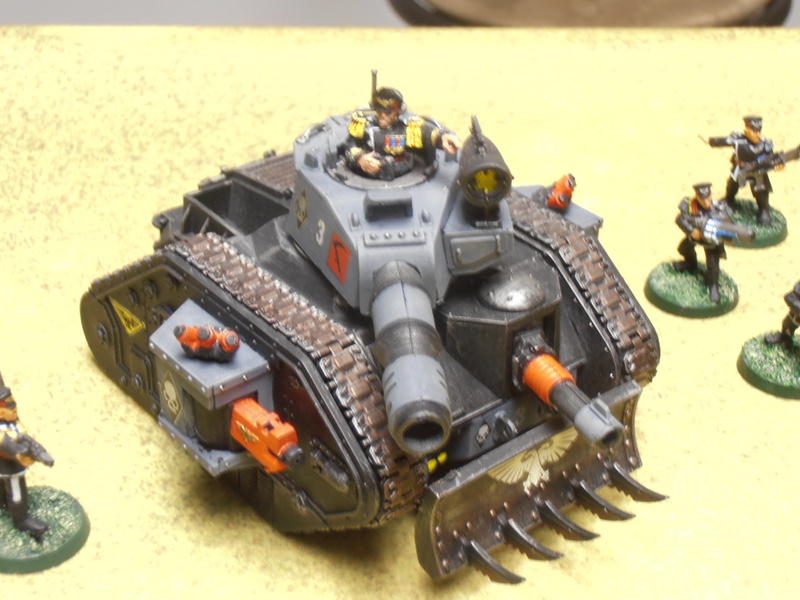
Leman Russ Battle Tank. I always went for the heavy bolters in the sponsons, as my strategy was shoot as many times as you can as opposed to courting disaster with plasma guns.

OLYMPUS DIGITAL CAMERA

My Basilisk. I think maybe I moved it during a game, once. Most of the time it sat there and angered my opponent. I used a radio from a 1/48th German radio set to represent improved comms.

OLYMPUS DIGITAL CAMERA

Lastly, my Griffon. I loved this tank, and of course, when I finally got this painted, GW came out with a new codex that didn’t include it. Like I said, I love mortars, so I have nothing but good things to say about it. I thought the Griffon tank crew that came with it didn’t look like they would pass Mordian muster, so I used some extra Mordian Lascannon crew members instead.

The problem with playing Imperial Guard, at least at that time, was cost. (Somehow I doubt that’s changed.) Most of these tanks were purchased secondhand. When it came to Infantry, Mordians, like every other chapter, were available in a 10 man squad for $30. The problem was each 10-man squad came with a grenade launcher and a Lascannon. If you wanted to change that, then you needed to buy heavy weapon teams and special weapon troops separately. That got pretty pricey, and left you with extra grenade launchers and Lascannon teams.

I’m still in the market for some plain-old Mordian Infantry with lasguns. I don’t need any heavy weapons or any special weapons, but I sure would like to get more regular joes.

More Armies of Yesteryear soon.

Armies of Yesteryear: Warhammer 40K Tyranids

Like many folks, my first Warhammer 40K army was Space Marines. Since almost everyone at my friendly local game store was playing marines, it became somewhat boring. Sure, there was one Ork player and an Eldar player, but they weren’t always around. So I bit the bullet and bought some Tyranids off a kid who was getting out of the hobby. Some of the paint jobs on the plastics are a little rough, but that’s because I was painting over his initial paint job, which was done with craft paints and was impossible to strip first. (Melonberry Genestealers anyone?)

68916_sm-2nd Edition, Copyright Games Workshop, Tyranids

Most of these miniatures are from the golden age of Tyranids, 2nd edition 40K. Old school players may remember these original paint schemes from the codex. Present-day Tyranids have changed a lot since then. I actually really like the present models but I’m obviously not buying new ones to replace what I already have. Aside from the cost, that’s just silly.

OLYMPUS DIGITAL CAMERA


From l-r: An old Lictor model, some (very) old-school Zooanthropes, a Biovore and a brood of metal Gargoyles. In front is a brood of Genestealers.

OLYMPUS DIGITAL CAMERA

In front are some metal Hormagaunts. These guys were always tipping over-a real pain in the ass during deployment and movement. Of course, they either got shot up or made it into hand-to-hand, so they didn’t stick around long once the game got underway. Behind them is a brood of Termagants, mostly the old plastic ones but some metal ones too. I still have about 12 of these that need to be painted. I always wanted to add more Termagants to the army. Way in the back in the center is my Hive Tyrant, the old school model with a Venom Cannon, Lash Whip and Bonesword. He’s flanked by two broods of original Tyranid Warriors (although the brood on the right has a newer Warrior with a Barbed Strangler),and you can barely make out a second Biovore behind the Hive Tyrant. I still love the look of these old models. Back then, they based all large size models on 40mm square monster bases.

OLYMPUS DIGITAL CAMERA


Last but not least, more Genestealers, more Gargoyles, another Lictor, one last Biovore, and the old metal Carnifex! The Carnifex is one of my favorite all-time GW models. It’s definitely got some heft to it!

OLYMPUS DIGITAL CAMERA


Oddly enough, you can see the Biovore better than the Carnifex in this picture. Blame the photographer.

OLYMPUS DIGITAL CAMERA


Tyranid Warriors with boneswords. I built the other brood with Deathspitters. As I recall, Deathspitters suck, and Tyranids shouldn’t waste time shooting when they can get up close and personal.

OLYMPUS DIGITAL CAMERA


Remember these old-school Zooanthropes? This is before they became floating heads.

OLYMPUS DIGITAL CAMERA


The Tyranid Lictor. Like the carnifex, one of my favorite metal models. But damn was it fiddly to put together!

I actually played a quick game of 40K with these Tyranids with a friend last year. He used my Ultramarines. As I recall, he won, but we both had about 2 miniatures left on the board at the end of the game. As it should be!

I still have a few more Armies of Yesteryear to post, so check back soon!